Feeds:
Posts
Comments

Archive for May, 2011

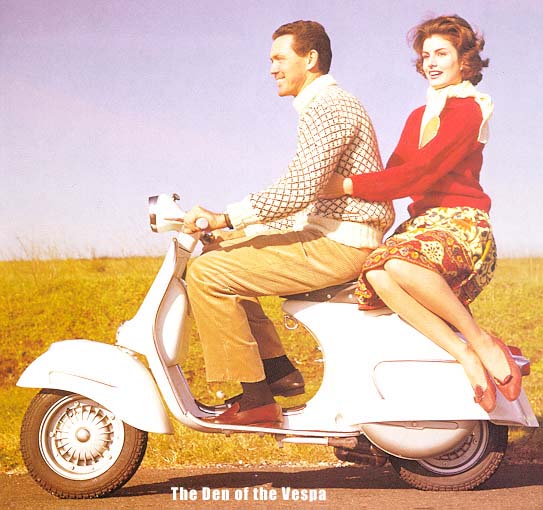
She couldn’t have been more than 18 or 19 years old. She pulled up on her Vespa alongside my cab on a warm night in Rome. She turned to her right, held her cigarette to her mouth, leaned over and without uttering a single word, the cabdriver reached out and lit her cigarette. She threw out an unenthusiastic “grazie” and drove away. I was stunned and astonished. How did this ragazza, at such a young age, manage to display such bravata?  The confidence and sheer audacity of it! She expected this man to perform on cue and he didn’t disappoint. It was a one-act play and each person had their role and they played it to perfection. More to the point, they played it with style. Romans can make even smoking look sexy!

The dictionary defines “Style” as: 1. a quality of imagination and individuality expressed in one’s actions and tastes; 2. a comfortable and elegant mode of existence; 3. a particular, distinctive, or characteristic mode of action or manner of acting.
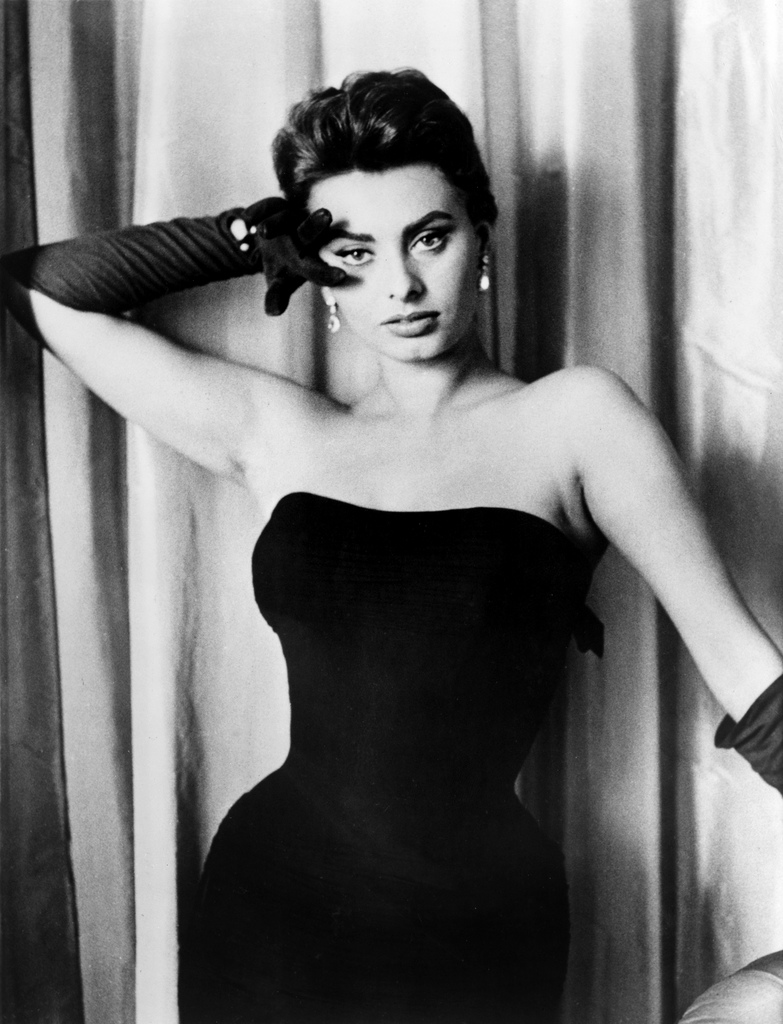
Sophia Loren

When we hear the phrase “Italian styling” what does this conger up in our minds? Elegant lines of a Maserati, a certain cut of a man’s suit, sleek and contemporary furnishings, police and carabinieri uniforms designed by Armani, ditch-diggers who look like Gucci models, and Sophia Lorens pushing baby carriages in stiletto heals on ancient cobblestones. It seems incomprehensible that these beautiful women could be as insecure and self-conscious as the rest of us, but it doesn’t matter – Italian women project a belief they are fabulous and deserving of adoration. I buy it, and more importantly, men buy it.  As far as I am concerned, that kind of confidence is the epitome of style.

A Beautiful Obsession

For Italians the term “la bella figura” is not just a saying, it’s a way of life.  My friend claims that an Italian would spend his very last dime for a pair of Dolce & Gabbana jeans before he’d pay his rent. I think that’s a bit of an exaggeration, however it certainly appears that being attractive is obligatory in Italy.  Bebbe Severgnini, the famous columnist and chronicler of the Italian psyche explains it this way, “ ‘Never judge a book by its cover’ sounds like an oversimplification in Italian. We judge books by their covers, politicians by their smiles, professionals by their offices, secretaries by their posture, table lamps by their design, cars by their styling, and people by their title.”

Italian Actor Raoul Bova

My mother, Nancy, came for a visit and we took the train to Rome for the afternoon.  We were strolling near the Piazza Barberini and walking towards us was a classically handsome Roman: tall, dark, curly-haired, chiseled features – you know, your basic Raoul Bova type. After he’d passed, my cute, lively, 78 year old mother turned to me and said, “that was a pretty one”!  Yes, they are “pretty” but being good-looking doesn’t, in itself, translate into “elegant”, “cool” or “stylish”.  A piece of art, for instance, doesn’t move you only by its beauty.  It also must tell a story, evoke an emotion and display depth and dimension.  Italian style: behind those beautiful covers is a lot of life and feeling.  When admiring an Italian’s aesthetic superiority, it’s hard to look away.  And it’s okay to look, in fact, it’s the national pastime of Italy.
by Toni DeBella

Read Full Post »

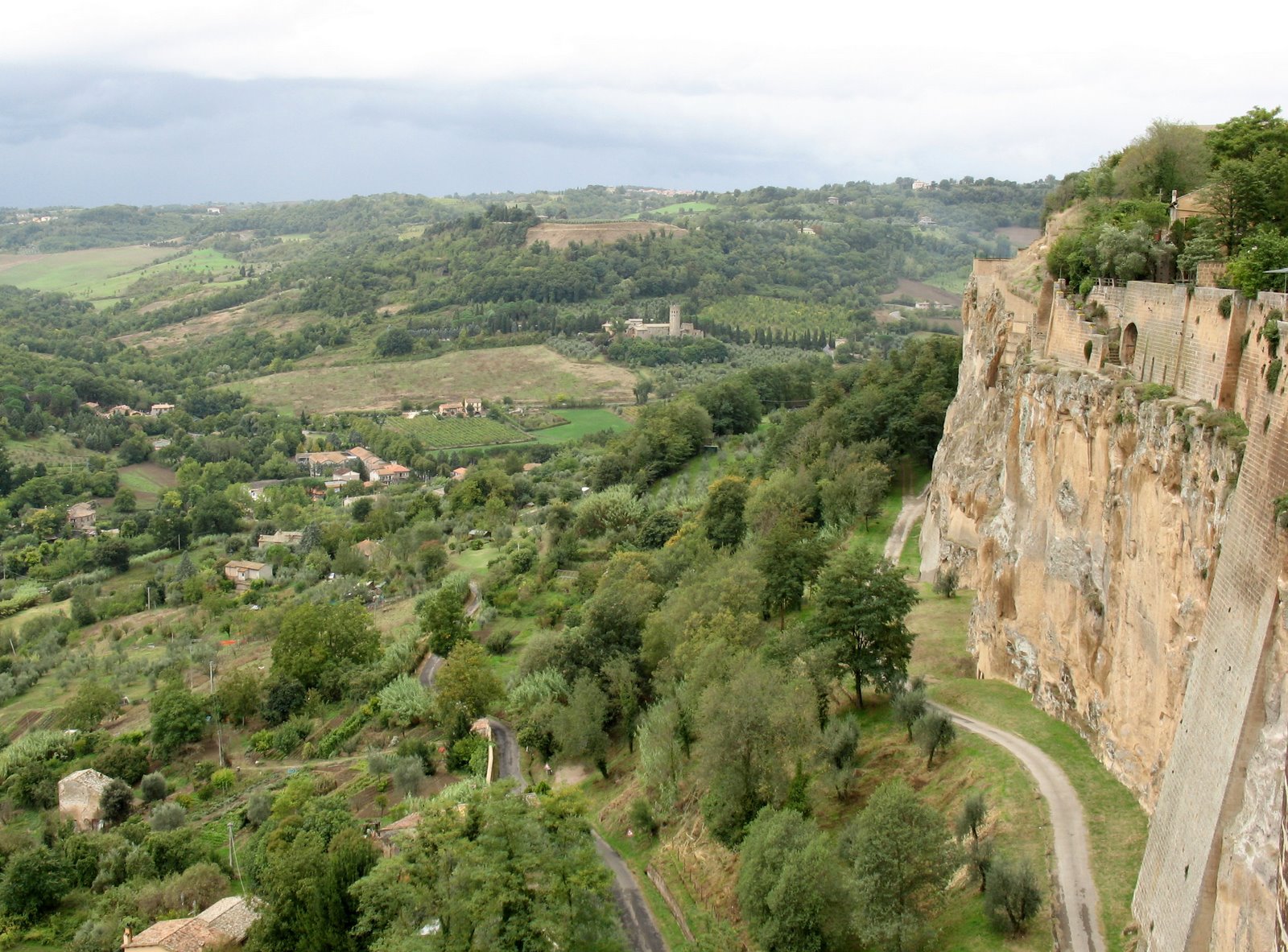
Machu Picchu, Stonehenge, the Pyramids of Giza, Mecca: All mystical and sacred places where one can find peace in the solitude and beauty of their surroundings. Add to the list Anello della Rupe – a spectacular walking trail that runs along the volcanic tufa rock on which the medieval town of Orvieto is perched. It’s a place where one can be alone, but not feel alone.  Where you can have long conversations with yourself and even answer yourself out loud, since you pass very few people along the way. Only a few meters below the city center, yet a world away.

My daily walking regime is a way to get a workout, some fresh morning air in my lungs, and perspective. The Percorso is an hour-and-a-half trek (depending on if you run, walk, or crawl) that circumnavigates the town, situated halfway down the steep cliffs.

Heavenly switchbacks

There are 5 entrances (Ingressi) to get onto the Rupe, but I personally like starting at Ingresso 5: Foro Boario. Taking the elevator down to the parking lot at Campo della Fiera, begin in a counter-clockwise direction (near the  Acquedotto medievale used by Orvietani as early as the 13th Century). After walking a few meters (past a small grouping of houses) you’ll officially enter the park.

Umbrian countryside

The natural trail is lined with rustic wooden fences and its switchbacks keep your legs and bottom in good shape. Climbing and then leveling off, you’ll come to my favorite side of the rock. Note the many grottos cut into the cliff walls and look out over the panorama for a spectacular view of the Hotel Badia – a former Abbey originally built in the 6th century with its existing structure constructed in the 12th century. A classic post card view, I can stand there forever staring at the awesome beauty of the Umbrian countryside.

Continuing up the path, you’ll come to a fork in the road where you can veer down to the Santurario di Cannicella and Necropoli estrusca (Etruscan necropolis). The remains of this sanctuary and necropolis date back to the 4th  and 6th centuries B.C., respectively. Double-back up to the main trail and you’ll continue on to another fork: Ingresso 4; Palazzo Crispo Marsciano. This is the most modern gate into the park. Its Renaissance building was designed by Antonio da Sangalllo and completed by Simone Mosca. But don’t exit just yet. Keep walking (this is the longest stretch of trail) until you come to the Grotta dei tronchi fossili (Grotto of the fossil trunks) – an artificial cavity with paleo-botanical remains that preceded the formation of the cliff some 350,000 years ago!

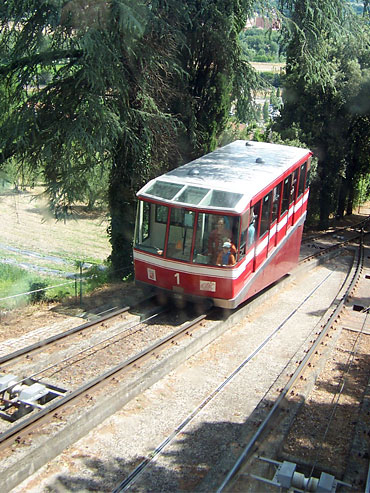
The Funicolare from the station

Another steep climb on cobblestones takes you up to the medieval entrance to the city, Porta Soliana: Ingresso 3. From here you have a view of the ruins of the Madonna della Rosa. The small, 17th-century church dedicated to the Virgin Mary. The tunnel for Orvieto’s funicolare (funicular) is right under your feet. This unique rail system was inaugurated in 1888 and connects Piazza Cahen with the train station in Orvieto Scalo.

Winter leaves pressed into the ground

You’re getting a bit of a break now, as the trail goes downhill and is shaded by trees. Further down the path it gets streeper, with the last section stairs climbing up to the road. You have to cross the road to continue on the trail. Note: Italians drive fast so pay attention at the crosswalk!

Once you’re safely on the other side, continue up the hill until you get to another fork located on your left. This is Ingresso 2: Porta Vivaria – a vertical ramp leading up to ruins of what was the medieval north gate known as dello Scenditoio. The trail splits off to the right, taking walkers to the official entrance of the famous archeological treasure of Umbria: The 5th-century, B.C. Necropoli Etrusca (Estrucan tombs of Volsinii). If the tombs are open, take the tour and then climb back up the steps to continue on the trail again. There’s more beauty still ahead.

Chapel of Crocefisso del Tufo

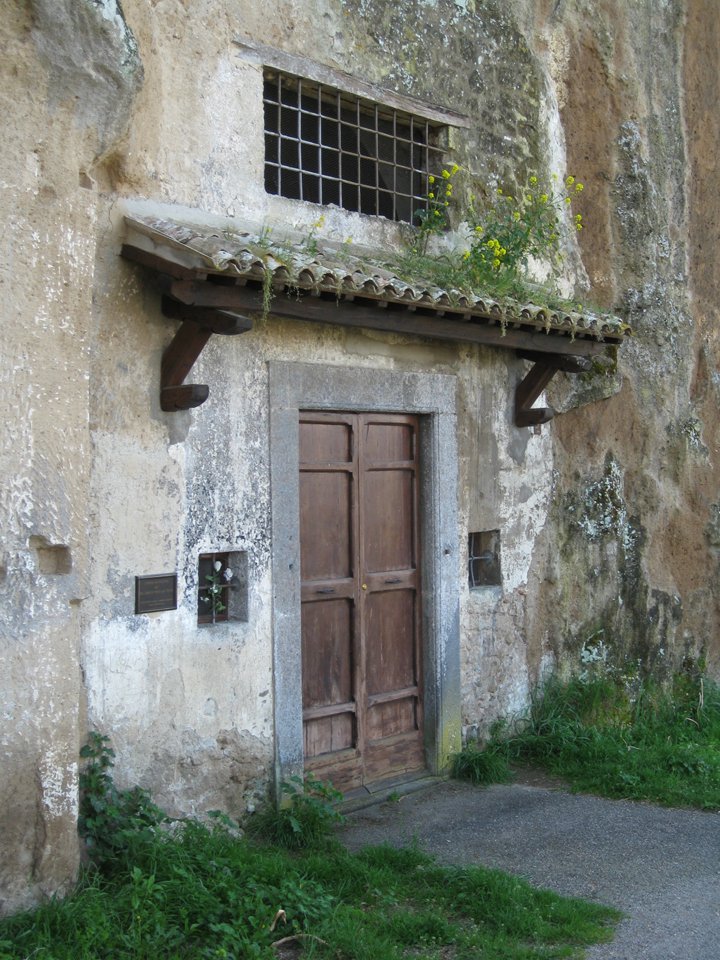
Chiesa del Crocefisso del Tufo

Chiesa del Crocefisso del Tufo. Around the 16th century, this chapel and crucifix were carved into the volcanic rock. Sweet offerings of wildflowers are often left on its windowsills. As you get closer to Porta Maggiore, you’ll find a building on the left, the Madonna del Velo. It’s one of the few examples of 18th century ecclesiastic architecture in Orvieto, consecrated on June 5, 1751 and newly renovated.

Cross the Via della Cava at the Porta Maggiore – this gate is the oldest monumental access to the city, dating back to the Etruscan era. It points travelers to either the road to Lago di Bolsena or the A-1 (Autostradatowards Rome.

At the traffic circle, you can either cross the road and walk back through the parking lot to the elevator or escalators (a fascinating engineering feat, carved through the rock up and carrying visitors to Piazza Ranieri.)

Promenade

You have two choices here: Continue on up the pretty pedonale (promenade) with its benches and streetlamps. Walk under Porta Romana and you will be on the shoulder of the road again – be careful of cars.

Walk up Via Alberici to Via Garabaldi.   Be sure and have a euro in your pocket so you can stop at the Blue Bar for a cappuccino and friendly conversation.

Even in the “dead of winter” there is so much life on the Anello della Rupe– literally and figuratively.  Sometimes I walk with friends, but mostly I look forward to going it alone.  “La Rupe” became my best friend and confidant.  She helped me gain my confidence, showed me the strength I possessed inside and listened to me without interruption in a very reflective time of my life.  It is a transforming experience – an hour that is entirely mine to day dream.  I guess you could say it is my daily planning meeting with God – or something God-like.  La Rupe will become your friend too.  Buona passeggiata, Tutti!

*PAAO (Archaeological and Environmental Park of the Orvietano)

**All along the trail are signs posted in Italian and English with facts and information about the park and its features.

by Toni DeBella

Read Full Post »

I Nonni DeBella

I used to make the same mistake most Italian Americans make. When someone asked my nationality I always responded “I’m Italian.”  It was when I moved to Italy and became immersed in its culture that I began to detect the distinct differences between us: Italians vs. Italian Americans.  We are cousins for sure – we share ancestors, history, traditions and certain sensibilities, but we are also completely different.  It comes down to that aged-old question: nature of nurture?  Nationality: I believe it’s in our DNA.

Sono italo americana

Many Italian Americans grow up in an environment that is quintessentially American but with undertones of Italian culture threaded through everything.  Mine, I think, is typical of a lot of first and second generation families whose descendants immigrated from Italy in the late 1800s to early 1900s.  My Sicilian grandparents, Gioachino DiBella and Nimfa Pizzo, were born in small towns near Palermo, and although they were very young children when they left their homeland, they remained “from the old country” their entire lives.  The photo at the top, for example, was taken in our backyard in San Jose, California around 1965.  At the time bell bottoms and the Beatles were in fashion, but looking at my grandparents in this photo, it could have been taken in 1865!

Born in America: Parts from Italy

My parents Luke and Nancy

I would say that Italian Americans are born with an identity crisis.  We are “hybrids” – the Prius’ of American society. We feel part of a culture and experience that is in stark contrast to the Ward and June Clever-types portrayed in TV sitcoms.  Our large, loud and chaotic families are the center of our universe.  At birthdays, Baptisms, Christmas, etc., the house is filled with people from the same gene pool.  Sunday dinner is served at 1:00 p.m. at our grandparents’ house (who live with us, next door to us, or down the street from us).  Thanksgiving dinner includes the traditional turkey, stuffing, yams and homemade ravioli.  Italian American friends never call – they just stop by after dinner, often bearing brown paper bags filled with cherries, zucchini, tomatoes…whatever they have in abundance from their trees or in their gardens.

Il Segreto: The Secret

I can’t really list for you all the differences between Italians from Italy and Italian Americans, I just know we are different.  I try to resist the urge to boil people down to stereotypes because it’s never useful and not quite that simple.  However, when I am surrounded by Italians, I can feel it.  It’s like they know something that I don’t know.  It’s in their eyes, in the way they carry themselves, a sort of special grin that says to me “I have the secret” to: 1) happiness, 2) living well, 3) the meaning of life.  Italians are a fascinating composite of intelligence, cynicism, superstition, generosity, warmth, hyper-criticism, style, emotionality and humanism. You certainly have to consider that their civilization has been in existence for thousands of years.  It’s a culture of people who have seen it all, done it all and have the T-shirt. Americans are the “teenagers” of civilizations – we have a lot to learn.  We may be the most powerful country in the free world, but we are “cultural pipsqueaks” in comparison.

“Families are like fudge – mostly sweet with a few nuts.” ~Author Unknown

A family camping trip

Despite all our differences, when it comes down to it, what makes us most alike – two separate people from two different countries – is our regard for family.  Family is the cornerstone of our lives: we hold it in highest esteem – even if we don’t understand each other, fight with one another, or at times hate each other.  We never forget that home and family is where we started. And if we are lucky to have been born into a good and loving one, we hope it is where we will be in the end.  So, here’s to the family…”Alla Famiglia”. That’s Italian and Italian American.

by Toni DeBella

Read Full Post »

“I do believe they are out there, guardian angels, soul mates…eager to share with us a portion of our travel. Don’t you believe there are circumstances that determine the situations, our thoughts that shape life? I don’t remember who said: “When the student is ready the teacher comes”. I think we are like a sort of antenna, able to send and receive messages at a specific frequency. There will always be someone who catches our requests and they certainly come to help us open a new door to the vastness of our soul. You have the answer in that sense of peace warming up your heart.”  

               – Antonio, in a letter dated July 11, 2010.

I’d heard about a website where you could find mother-tongue (madre lingua) speakers with whom to practice Italian, and in turn, they could practice their English with you.  By establishing a line to an Italian pen pal (un amico di penna), might I narrow the gap and feel a little bit closer to the country I love?  I registered under my il nome italiano (Italian name) Antonella and waited for the responses.

Several days passed when I received a lovely introduction letter from Antonio, a marketing executive.  He wanted to improve his English for work.  He was obviously intelligent and serious-minded, so I wrote him back..and it begins.

Antonio writes that he was born and raised in the north of Tuscany, not far from the Ligurian and Tuscan Coasts.   He is married and has a daughter at university, is a veracious reader, an avid swimmer, and sometimes, while on his frequent business trips around Europe, a painter of landscapes.

Antonio’s letters were always introspective and soulful – they touched me deeply.  Despite the language, culture and distance that separated us, we seemed to see life from similar points of view.  In less than a month we were writing long letters to each other – mine in Italian, his in English.  With each letter we revealed a little more of ourselves (he referred to it as “loosening the knots”).  We wrote of things that we couldn’t say to our closest friends and shared times in our lives that were difficult or profound.  I felt safe to express myself without concern of judgment or criticism.  We had little to lose because, in essence, we were strangers – black letters on a white computer screen.  We called what we had created between us “il nostro angolo” (our corner) – a special place where we could be our best selves.

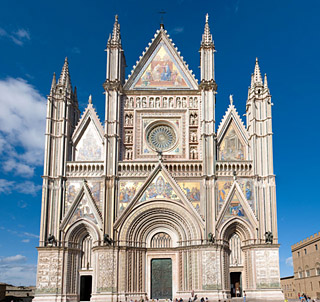
It was springtime and I was back in Umbria at the same time Antonio was in Rome for business, so we arranged to meet for a coffee on his way home.  For both of us the Duomo of Orvieto is a very symbolic and mystical place, so we agreed that in front of its beautiful facade was a perfect meeting point.  I’d seen a photo of him a month before, but photographs never accurately portray a person’s “presence”.  Antonio strikes a beautiful figure – tall, lean and handsome.  He wore his white hair a bit long (as many Italian men do) and his glasses highlighted his blue eyes that were so bright a color, they were somewhat distracting.  He explained he must be back in Tuscany by dinnertime and had only two hours to spend with me. It was a warm and sunny day, so we decided to walk around the narrow streets of town and talk.

Those two hours passed as if they were two minutes.  The time together was so comfortable, quiet, familiar…so perfectly normal.  It seemed more like a long-awaited reunion than a first-time meeting.  After circling town, we returned to the spot where we started and sat down on the Duomo steps.  The silence between us was deafening, but neither of us knew what words to say. He finally broke the spell when he announced it was time for him to go.  We walked back to his car arm and arm, we said our goodbyes, promised to write soon, hugged and I turned and walked away. It was the last time I saw Antonio.

Throughout the year there have been occasional short notes to one another, but really, what is the point?  We both know that nothing good can come from our continued contact and although I didn’t want to let it go, the right thing to do was to stop our correspondence.  Antonio said his life is like a gypsy’s and he once wrote this about it: “Sometimes I figure that this life is driving me slowly but constantly and directly towards my dark night”.  I think about Antonio often.  I miss our conversations and wonder where in the world he might be.  But like a little jewel, the memory of that day is stored preciously in a little box in that little “corner” that we shared.


by Toni DeBella

Read Full Post »