Feeds:
Posts
Comments

Archive for the ‘Culture’ Category

Machu Picchu, Stonehenge, the Pyramids of Giza, Mecca: All mystical and sacred places where one can find peace in the solitude and beauty of their surroundings. Add to the list Anello della Rupe – a spectacular walking trail that runs along the volcanic tufa rock on which the medieval town of Orvieto is perched. It’s a place where one can be alone, but not feel alone.  Where you can have long conversations with yourself and even answer yourself out loud, since you pass very few people along the way. Only a few meters below the city center, yet a world away.

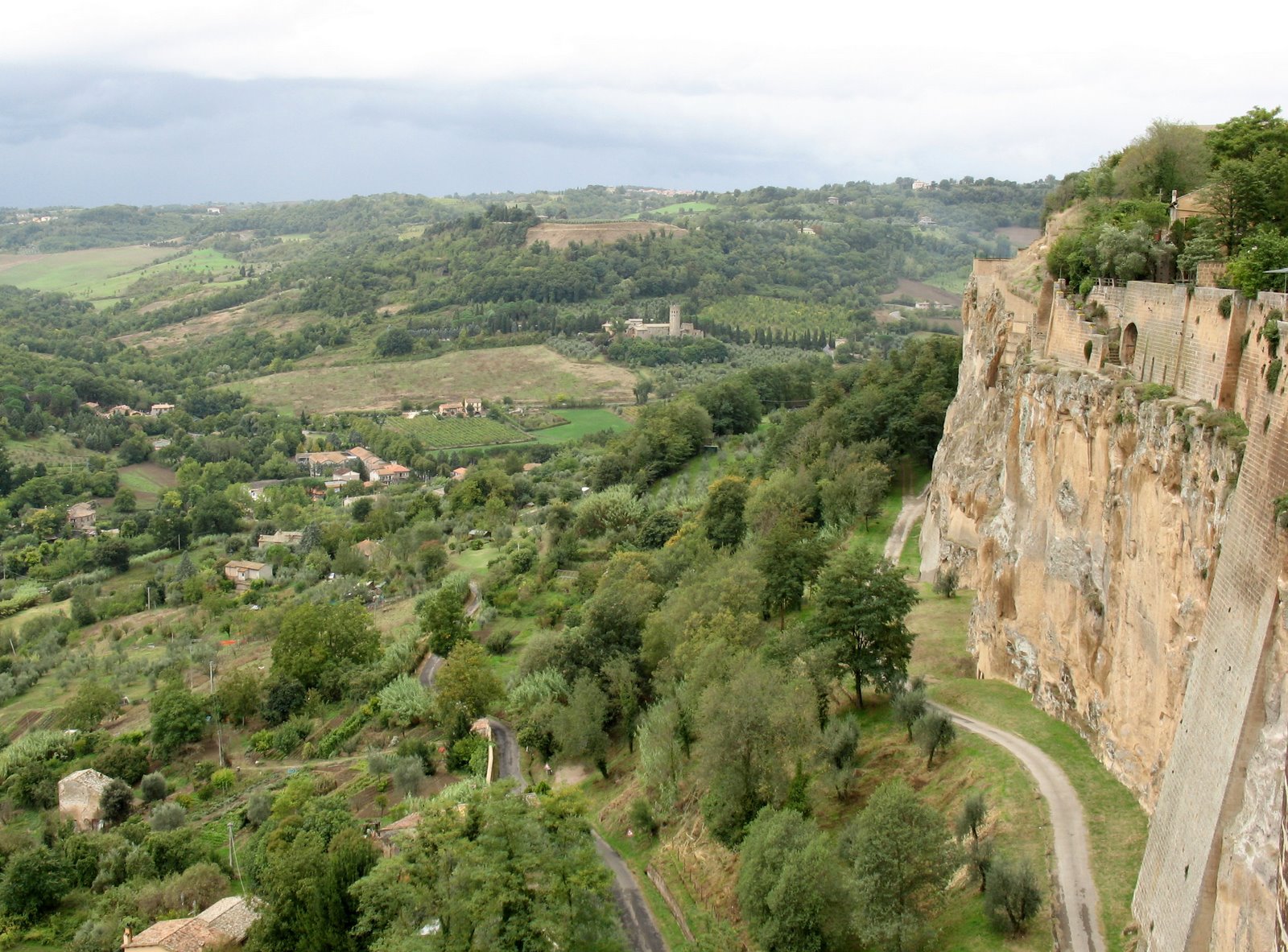
My daily walking regime is a way to get a workout, some fresh morning air in my lungs, and perspective. The Percorso is an hour-and-a-half trek (depending on if you run, walk, or crawl) that circumnavigates the town, situated halfway down the steep cliffs.

Heavenly switchbacks

There are 5 entrances (Ingressi) to get onto the Rupe, but I personally like starting at Ingresso 5: Foro Boario. Taking the elevator down to the parking lot at Campo della Fiera, begin in a counter-clockwise direction (near the  Acquedotto medievale used by Orvietani as early as the 13th Century). After walking a few meters (past a small grouping of houses) you’ll officially enter the park.

Umbrian countryside

The natural trail is lined with rustic wooden fences and its switchbacks keep your legs and bottom in good shape. Climbing and then leveling off, you’ll come to my favorite side of the rock. Note the many grottos cut into the cliff walls and look out over the panorama for a spectacular view of the Hotel Badia – a former Abbey originally built in the 6th century with its existing structure constructed in the 12th century. A classic post card view, I can stand there forever staring at the awesome beauty of the Umbrian countryside.

Continuing up the path, you’ll come to a fork in the road where you can veer down to the Santurario di Cannicella and Necropoli estrusca (Etruscan necropolis). The remains of this sanctuary and necropolis date back to the 4th  and 6th centuries B.C., respectively. Double-back up to the main trail and you’ll continue on to another fork: Ingresso 4; Palazzo Crispo Marsciano. This is the most modern gate into the park. Its Renaissance building was designed by Antonio da Sangalllo and completed by Simone Mosca. But don’t exit just yet. Keep walking (this is the longest stretch of trail) until you come to the Grotta dei tronchi fossili (Grotto of the fossil trunks) – an artificial cavity with paleo-botanical remains that preceded the formation of the cliff some 350,000 years ago!
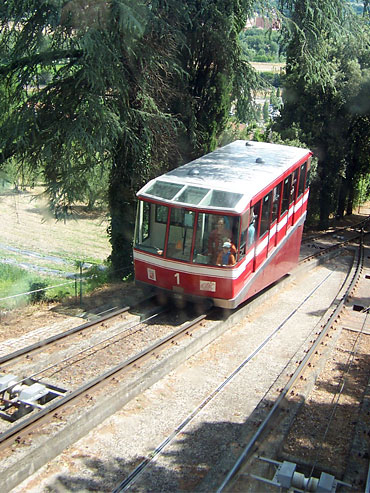
The Funicolare from the station

Another steep climb on cobblestones takes you up to the medieval entrance to the city, Porta Soliana: Ingresso 3. From here you have a view of the ruins of the Madonna della Rosa. The small, 17th-century church dedicated to the Virgin Mary. The tunnel for Orvieto’s funicolare (funicular) is right under your feet. This unique rail system was inaugurated in 1888 and connects Piazza Cahen with the train station in Orvieto Scalo.

Winter leaves pressed into the ground

You’re getting a bit of a break now, as the trail goes downhill and is shaded by trees. Further down the path it gets streeper, with the last section stairs climbing up to the road. You have to cross the road to continue on the trail. Note: Italians drive fast so pay attention at the crosswalk!

Once you’re safely on the other side, continue up the hill until you get to another fork located on your left. This is Ingresso 2: Porta Vivaria – a vertical ramp leading up to ruins of what was the medieval north gate known as dello Scenditoio. The trail splits off to the right, taking walkers to the official entrance of the famous archeological treasure of Umbria: The 5th-century, B.C. Necropoli Etrusca (Estrucan tombs of Volsinii). If the tombs are open, take the tour and then climb back up the steps to continue on the trail again. There’s more beauty still ahead.
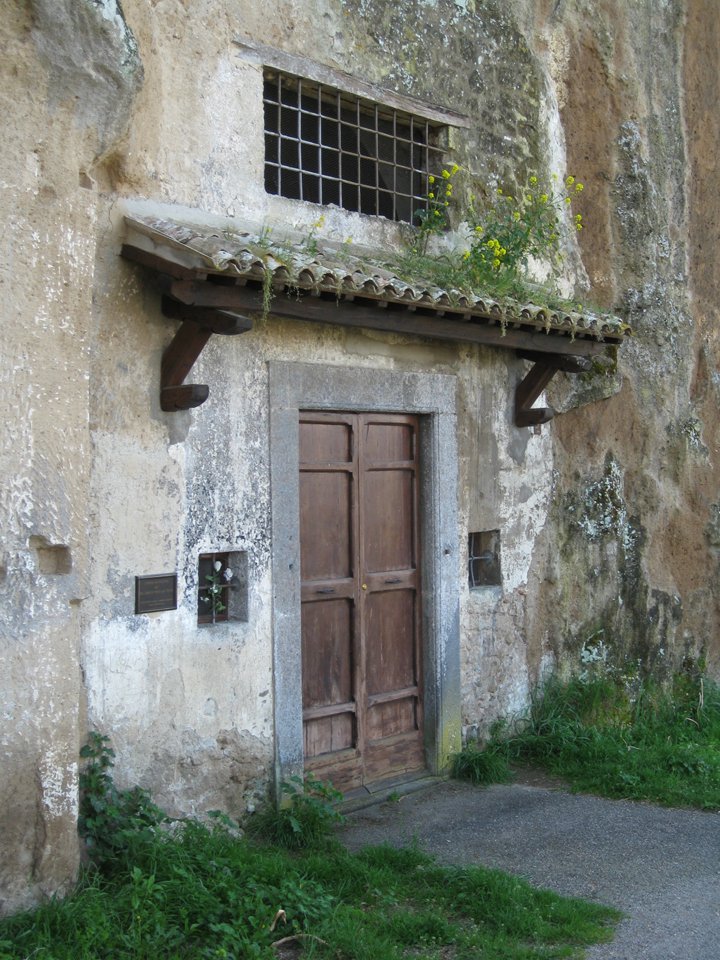
Chapel of Crocefisso del Tufo

Chiesa del Crocefisso del Tufo

Chiesa del Crocefisso del Tufo. Around the 16th century, this chapel and crucifix were carved into the volcanic rock. Sweet offerings of wildflowers are often left on its windowsills. As you get closer to Porta Maggiore, you’ll find a building on the left, the Madonna del Velo. It’s one of the few examples of 18th century ecclesiastic architecture in Orvieto, consecrated on June 5, 1751 and newly renovated.

Cross the Via della Cava at the Porta Maggiore – this gate is the oldest monumental access to the city, dating back to the Etruscan era. It points travelers to either the road to Lago di Bolsena or the A-1 (Autostradatowards Rome.

At the traffic circle, you can either cross the road and walk back through the parking lot to the elevator or escalators (a fascinating engineering feat, carved through the rock up and carrying visitors to Piazza Ranieri.)

Promenade

You have two choices here: Continue on up the pretty pedonale (promenade) with its benches and streetlamps. Walk under Porta Romana and you will be on the shoulder of the road again – be careful of cars.

Walk up Via Alberici to Via Garabaldi.   Be sure and have a euro in your pocket so you can stop at the Blue Bar for a cappuccino and friendly conversation.

Even in the “dead of winter” there is so much life on the Anello della Rupe– literally and figuratively.  Sometimes I walk with friends, but mostly I look forward to going it alone.  “La Rupe” became my best friend and confidant.  She helped me gain my confidence, showed me the strength I possessed inside and listened to me without interruption in a very reflective time of my life.  It is a transforming experience – an hour that is entirely mine to day dream.  I guess you could say it is my daily planning meeting with God – or something God-like.  La Rupe will become your friend too.  Buona passeggiata, Tutti!

*PAAO (Archaeological and Environmental Park of the Orvietano)

**All along the trail are signs posted in Italian and English with facts and information about the park and its features.

by Toni DeBella

Read Full Post »

“I do believe they are out there, guardian angels, soul mates…eager to share with us a portion of our travel. Don’t you believe there are circumstances that determine the situations, our thoughts that shape life? I don’t remember who said: “When the student is ready the teacher comes”. I think we are like a sort of antenna, able to send and receive messages at a specific frequency. There will always be someone who catches our requests and they certainly come to help us open a new door to the vastness of our soul. You have the answer in that sense of peace warming up your heart.”  

               – Antonio, in a letter dated July 11, 2010.

I’d heard about a website where you could find mother-tongue (madre lingua) speakers with whom to practice Italian, and in turn, they could practice their English with you.  By establishing a line to an Italian pen pal (un amico di penna), might I narrow the gap and feel a little bit closer to the country I love?  I registered under my il nome italiano (Italian name) Antonella and waited for the responses.

Several days passed when I received a lovely introduction letter from Antonio, a marketing executive.  He wanted to improve his English for work.  He was obviously intelligent and serious-minded, so I wrote him back..and it begins.

Antonio writes that he was born and raised in the north of Tuscany, not far from the Ligurian and Tuscan Coasts.   He is married and has a daughter at university, is a veracious reader, an avid swimmer, and sometimes, while on his frequent business trips around Europe, a painter of landscapes.

Antonio’s letters were always introspective and soulful – they touched me deeply.  Despite the language, culture and distance that separated us, we seemed to see life from similar points of view.  In less than a month we were writing long letters to each other – mine in Italian, his in English.  With each letter we revealed a little more of ourselves (he referred to it as “loosening the knots”).  We wrote of things that we couldn’t say to our closest friends and shared times in our lives that were difficult or profound.  I felt safe to express myself without concern of judgment or criticism.  We had little to lose because, in essence, we were strangers – black letters on a white computer screen.  We called what we had created between us “il nostro angolo” (our corner) – a special place where we could be our best selves.

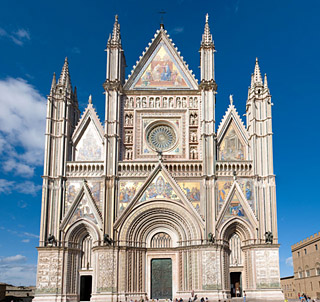
It was springtime and I was back in Umbria at the same time Antonio was in Rome for business, so we arranged to meet for a coffee on his way home.  For both of us the Duomo of Orvieto is a very symbolic and mystical place, so we agreed that in front of its beautiful facade was a perfect meeting point.  I’d seen a photo of him a month before, but photographs never accurately portray a person’s “presence”.  Antonio strikes a beautiful figure – tall, lean and handsome.  He wore his white hair a bit long (as many Italian men do) and his glasses highlighted his blue eyes that were so bright a color, they were somewhat distracting.  He explained he must be back in Tuscany by dinnertime and had only two hours to spend with me. It was a warm and sunny day, so we decided to walk around the narrow streets of town and talk.

Those two hours passed as if they were two minutes.  The time together was so comfortable, quiet, familiar…so perfectly normal.  It seemed more like a long-awaited reunion than a first-time meeting.  After circling town, we returned to the spot where we started and sat down on the Duomo steps.  The silence between us was deafening, but neither of us knew what words to say. He finally broke the spell when he announced it was time for him to go.  We walked back to his car arm and arm, we said our goodbyes, promised to write soon, hugged and I turned and walked away. It was the last time I saw Antonio.

Throughout the year there have been occasional short notes to one another, but really, what is the point?  We both know that nothing good can come from our continued contact and although I didn’t want to let it go, the right thing to do was to stop our correspondence.  Antonio said his life is like a gypsy’s and he once wrote this about it: “Sometimes I figure that this life is driving me slowly but constantly and directly towards my dark night”.  I think about Antonio often.  I miss our conversations and wonder where in the world he might be.  But like a little jewel, the memory of that day is stored preciously in a little box in that little “corner” that we shared.


by Toni DeBella
Read Full Post »

I am standing there completely paralyzed, sweat is forming on my brow. I can feel my heart racing and I’m not sure which direction to go or who I can call to for help. I want to turn and run but the crowd behind me is pushing me forward. I feel trapped, scared, confused, disoriented…I don’t know what to do…

…Do I pay first and then order? Or, do I order, go back to the cashier, pay and then give my receipt to the barista? If I order first and want to sit down at a table, do I wait for my coffee at the counter and then carry it  there myself or order and then expect the barista to bring it to me and pay on my way out?

The Italian Coffee Bar: an institution, a meeting place, a culture unto itself and a complete enigma! As far as I can tell, there are no hard and fast rules – kind of like irregular Italian verbs – you can’t always get an explanation of when to apply them.  It’s intuitive – a subtle sense that develops over time and with a lot of “trial and error”.  In my case, mostly “error”.  Why on earth can’t I figure this out? I mean, I am reasonably intelligent – I went to college for God’s sake!  I can certainly manage to order a coffee in Italy. How hard can it be? Well… apparently pretty hard.

Here is a short list of coffee drinks you can order at a neighborhood Italian bar: Caffe’ (espresso), Caffe’ Americano (watered-down espresso in a large cup), Cappuccino (espresso with steam milk on top), Caffe’ Corretto (espresso with a shot of liquor), Caffe’ Freddo (espresso cold), Hag (decaf espresso), Caffe’ Latte (half espresso, half steamed milk), Caffe’ Lungo (espresso made with more hot water), Macchiato (espresso with a dollop of cream – hot or cold), Caffe’ Ristretto (stronger espresso), Shakerato (espresso, milk, sugar, and ice, shaken), Caffe D’Orzo (espresso made with barley), and Cioccolata Calda (hot chocolate)…just to name a few.  See, easy.

Until I am fully versed in coffee protocol, I have found a way to cope with my incompetency and the stress that comes with it:  I limit myself to a couple of bars in town that I am familiar and comfortable with. At Caffe’ Del Corso and Blue Bar in Orvieto, I know the owners, they know me and their system is clear (and they give me the locals’ price). Honestly, I can’t bear to see one more barista’s look of disgust when I break the cardinal rule of Italian coffee-taking; ordering a cappuccino after 11:00 a.m!

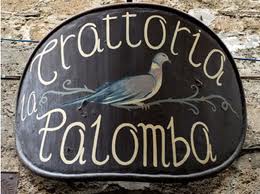
At restaurants, I used to pretend that I actually wanted an espresso after dinner because I knew the waiter would glare at me and judge me if I asked for anything more than a macchiato (espresso with a dollop of cream). In the case of Giampiero, owner of La Palomba, every time I order a cappuccino after dinner, he gives me a hard time. We have long discussions (arguments really) about why I shouldn’t have milk late at night. (Italians believe its not good for digestion).  When I ask an Italian why it’s okay to eat Panna Cotta or Tiramisu after a meal (both made with heavy cream), but not drink coffee with milk, I never get a straight answer. As far as I can tell the explanation is “you just don’t, punto! And with Giampiero, it has become a running joke, a comedy routine like “Who’s on First”. I eventually get what I want, but I have to practically beg him. Then he just shrugs his shoulders, smiles and a cappuccino arrives at my table. But you know, it’s worth all the pain and suffering because, in the end, I get to drink coffee as smooth and delicious as any in the world. Italians love their coffee and so do I!

Brothers Mirko and Cristian Galanello will offer you coffee, cocktails and soccer matches at Caffe’ del Corso, Corso Cavour 158, 05018 Orvieto, 0763 344724; Anthony and Romina make you feel very welcomed whether you are a local or a tourist at Blue Bar, Via Garibaldi, 23, 05018 Orvieto, 0763 344150; Dine on classic Umbrian cuisine and wine at La Palomba, Via Cipriano Menente, 16, 05018 Orvieto, 0763 343395. Tell owner Giampiero that “Silvia” sent you (an inside joke between us) and after a wonderful meal, order un caffe’!

by Toni DeBella
Read Full Post »

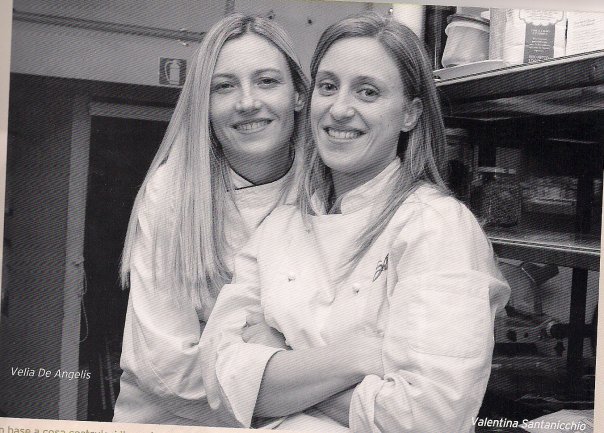
Two extraordinary women and cutting-edge chefs embarked on parallel life paths that take them on separate journeys of discovery, leading them to their passion for food and wine. Both were born in tiny farming communities in the fertile and luscious region of Umbria. They returned to their ancestral home of Orvieto, Italy, where their paths finally cross to reveal a serendipitous family connection and, as a result, they form a special bond of friendship and sisterhood. I’m extremely lucky to know them, both individually and together, and I love telling their story – it’s a story of how fate can bring surprises in the simplest ways…surprises that might be waiting for you just around the corner – or, in the case of Velia and Valentina – in your own backyard!

Velia’s story

Velia De Angelis’ family’s love for cooking dates back many generations to her great, great-grandfather Giuseppe “Peppe” Chiasso. Nonno “Peppetto” would prepare meals for the workers returning from the countryside and, as the story goes, Peppetto couldn’t help inviting everyone in the village to join them at their table – sometimes more than 30 people would be found eating in the courtyard! Just like her great-grandfather before her, Velia takes pleasure in sharing her enthusiasm for cooking, food and wine. She believes food can be the key to understanding lands, regions and people. Maybe it’s archetypical memories or the family stories passed down from generations before her that helped form Velia’s unique and creative way of cooking and inspired her to endow this gift to others in a most vivacious and effervescent way!

Velia was born in Monterubiaglio, 7km from the Etruscan hill town of Orvieto. She studied to become a primary school teacher, but in 1996 she left Italy for the United Kingdom – following her dream to create a life full of exciting and new adventures. Graduating from the University of Derby, she returned to Italy with the Virgin Company to launch the opening of Palazzo Sasso, one of the most luxurious and elegant hotels on the Amalfi Coast. It was in Positano that she opened her first cooking school and fell in love with the local cuisine of this spectacular seaside region. In 2006, Velia returned to Orvieto with her partner in life and business, GianLuca Antoiniella, and opened the energetic, trendy and late-night, La Champagneria. Along with her cooking school “Velia’s Cooking Style”, she appears weekly on “Chef Per Un Giorno” (Chef For a Day), a popular television program filmed in Rome.

Valentina’s Story

Valentina Santanicchio was born and raised on an organic farm in the feudal town of Ficulle in the countryside, 20km outside of Orvieto. It was there that she learned the importance of fresh, local and sustainable products. Located in the “Green Heart of Italy”, this region of Umbria is the capital of the “Citta’ Slow”(Slow City) movement. For centuries Italians have been thriving on “La Cucina Genuina” (genuine/authentic cuisine): Seasonal fresh ingredients and produce, locally grown and simply prepared. Returning to Orvieto after years living in Florence, Valentina’s appreciation of the deep traditions of food and wine that surrounded her as a girl had resurfaced. She took a position at a small cafe in the medieval center of town and fell in love with cooking and the restaurant world. In 2009, at the young age of 28, she opened Ristorante Al Saltapicchio, a bright, warm and instantly-popular restaurant located on the Piazza San Domenico. The perfect mix of modern ambiance and classic, authentic dishes, Valentina’s charm and energy bring something special to her innovative menu.

Velia and Valentina

I met both Velia and Valentina in the winter of 2009, nearly one year before they had been introduced to each other. It’s late February and I am back in Orvieto for my bi-annual pilgrimage to this town that I love. Valentina, Velia and I are sitting at La Champagneria late one evening, laughing and talking about life. They remind me of Lucy Ricardo and Ethel Mertz – it’s like they’ve been best friends their entire lives. It’s astounding to me that they actually managed to live, go to school, work, become chefs, open restaurants and, in a town of only 5,000 people, not collide until two years ago. Velia remembers that from the beginning she felt they were strangely connected. Valentina laughs about how they often finish each other’s sentences, are so similar in appearance (both are beautiful blonds) and approach life with the same fearlessness and audacity. It was discovered one day, by chance, that Velia’s grandmother helped to raise Valentina’s mother, Velma, after the death of Velma’s mother at a young age. To Velia and Valentina, this surprising revelation was the confirmation of what they knew in their hearts – they are “la famiglia.”

These two remarkable “forces of nature” have now combined their efforts to bring their innovative spirits and unique cooking personalities to special events and guest-hosted dinners in Umbria and throughout Italy. They have a tireless work-ethic, an unending wealth of energy, and are bottomless pits of enthusiasm. I get tired just thinking about their long hours and grueling schedules. But Velia and Valentina remain bright lights – original, strong, passionate and visionary. They are very different women, yet they are very much in tune – they are “le sorelle d’anima: Soul Sisters”.

YouTube Video:

You can see and taste the work of Velia De Angelis at La Champagneria, Piazza Marconi, 2, 05018 Orvieto (TR), tel. 0763 344102, e-mail info@champagneria-orvieto.com; at Velia’s Cooking Style, Via delle Coste, 2 – 05010 Monterubiaglio (TR) Tel 0039 338 94 63 464 | e-mail: info@veliascookingstyle.com; www.veliascookingstyle.com; and on “Chef per Un Giorno” at LA7.tv

Valentina’s Santanicchio’s wonderful Ristorante Al Saltapicchio can be found at Piazza XXIX Marzo 8/a, 05018 Orvieto, (TR). Tel. 0039 339 66 72 909. See interviews with Valentina at http://www.youtube.com/watch?v=jXIq6Q_o5cg; http://www.youtube.com/watch?v=4YRgDKP2R48; and you can read about her in an upcoming article for Conde Nast’s Traveler.

by Toni DeBella

Read Full Post »

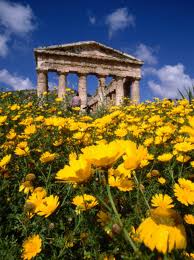
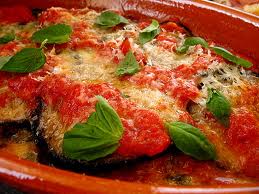
AnnaMaria arrived in Agrigento yesterday and I received an email from her to say that her apartment was beautiful but that she was dead tired. I know just how she feels. It’s probably the way I feel each time I land in Rome – it feels like home. She and I met in 2009, just after I returned from my winter living in Orvieto. I was feeling completely lost and disconnected – not adjusting well to the reentry into American life. She is the antithesis of me: dark, slim, dignified and subdued (albeit with a biting wit and sarcastic sense of humor that she reveals only when she knows you well). What we have most in common is that we know where we really belong –Italy. Me in Umbria, she in Sicilia. We know that one day we will become permanent residents of this wild, crazy and spectacularly beautiful place. This we know for sure. It was such a lovely and warm evening in San Francisco, so after work I decided to treat myself to a nice dinner in her honor. I strolled up and down Union Street and stopped in front of Pane E Vino Trattoria. Through the window I could see they had a few small tables near the front where there is light so I could read my book. (I always have to bring something to do in case I get self-conscious about dining alone). The proprietor is Italian, all the waiters are Italian, the elderly couple next to me were Italian, the older couple on the other side of them were Italian (he immigrated to San Francisco in 1948 – I was eavesdropping). I recognized a guy from Milano I’d met a few times at my Italian conversation meet-up. I spoke to my Venetian waiter in Italian, but first I apologized for my sub-standard skills. Like most Italians, he was kind and said “No, no, you speak very well, Bella”. Gotta love those Italians! I sat there eating my delicious Melanzane alla Parmigiana and a perfectly grilled side of asparagus with a glass of Chianti, just listening to everyone around me speaking Italian. Couples, families, a man and his mother. I noticed on the wall above me a ceramic sculpture of the moon and sun. It made me think of my artist-friend who sculpts versions of this symbol in terracotta. That’s when I felt the tears well-up in my eyes. It’s not sadness, exactly, but not really nostalgia either. It’s hard to describe, but it always catches me off-guard. I’ve been back from my last trip for almost a month and thought I was past the culture-shock and let-down that grips me. I thought I was doing okay, but I guess I was deluded. Walking to my car, I thought about AnnaMaria again. Not one-single ounce of my being is jealous of her right now. On the contrary, I’m happy for her, proud of her, admire her for taking the leap-of-faith and going to Sicily for 2 months. I know what it takes to do that – the confidence to know what makes you happy and the courage to try to obtain it. I want for her what I want for myself; to find a way to stay in Italia forever. Complimenti, AnnaMaria!!! by Toni DeBella

Read Full Post »

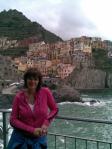
I come back to Orvieto at least twice a year, but I’ve always wanted to make the journey to Le Cinque Terre, so this trip I decided to drag myself away from “La Rupe” for a few days and head for the Ligurian Coast.  Winter is a good time to avoid the usually crowded trails of the high season and the sweltering heat of summer.

It was an easy 4½-hour train ride from Umbria, changing trains only once in Florence.  It was raining lightly, but that only added to the atmosphere of towns perched on the rocky Ligurian coast.  In La Spezia, I met my friend Angelo, who lives and works in Torino (3 hours north).  His train was an hour late so I waited in the bar at the train station.  When he finally arrived, we caught the train to Monterosso al Mare where we’d made reservations at B&B Arcobaleno (rainbow).  After unpacking, we met up to walk the promenade that lines the beach to the antique section of town.  We found an outdoor cafe and sat down for a glass of Proscecco when it started to rain, but luckily we were protected by a large awning.  As we sat there, a train carrying passengers between the five villages drove right over our heads!  The waitress, Chiara, recommended a seafood restaurant and because we were both so hungry, we ordered too much food.  I had ravioli with spinach in a walnut cream sauce. Angelo had pasta with pesto (a specialty of Genova – just an hour north).  We shared mixed, deep-fried seafood (the famous Anchovies of Monterosso, are a local specialty that have a Protected Designation of Origin status from the European Union.)  Two glasses of Lemoncello completed the dining experience and we were off to bed…we had a big day ahead of us.In the morning there was not much sun but, fortunately no rain, the temperature was pleasant for our long trek.  We took the train to the first town, Riomaggiore where we purchased a pass that includes access to the paths as well as unlimited train trips between Riomaggiore and Monterosso.  We walked the main street that leads to the sea.  Colorful houses were stacked on top of each other like a crowd of people trying to push against one another to see the view.  And what a view it is!  Red, green, yellow and blue fishing boats lined the small harbor and men were fishing from the rocks (reminding me of my father and his love of fishing).  Did their wives send them out for fish like American wives send their husbands to the supermarket?

We began our hike at the “Via Dell’Amore (Love Walk) which cuts along the cliffs above the calm sea below.  Much like the famous bridge in Rome, Ponte Milvio, lovers hang locks on the nets attached to the rocks, writing their names to declare their undying love.  Normally you could walk from the end of the Via Dell’Amore to the Sentiero Azzurro (“Light Blue Trail”), the trail that connects the five villages, but today the trails were closed because of rock slides, so instead we caught the train to the next towns of Manarola and Corniglia.  The walk to Corniglia from the station was a long switch-back road, so we jumped on the bus that ferries tourists into town.  Angelo and I decided to buy a couple of sandwiches, a bottle of wine and eat our lunch on the beach, but it was not meant to be.  Both Markets that make sandwiches were out of bread…we waited too long!!!  Instead we ate our lunch at a bar and eavesdropped on the locals’ stories to one another – Ligurians seemed to be a very calm and easy-going group.  With lunch finished, off we went…there was much more to see.

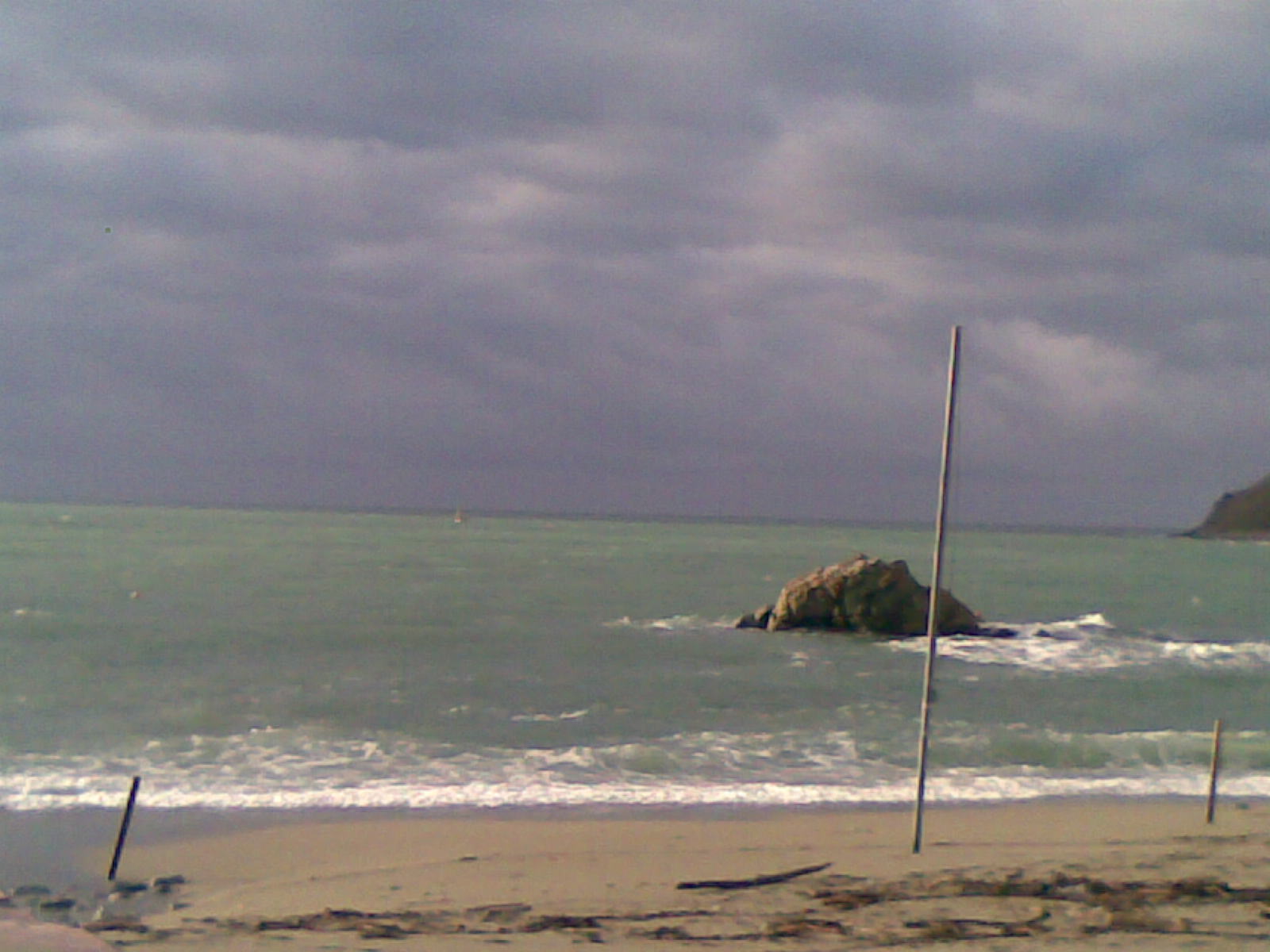
Vernazza is the liveliest of the towns.  All the brightly colored boats are parked in the middle of the piazza and so we decided to take our coffee outside on a bench while watching the waves crash onto the rocks. I’d still be sitting there now, but it was getting dark and we needed to return to Monterosso by sunset.  After a long day, we took a break and met up that evening for a pizza in the old part of town again.  Not wanting to destroy all the good effects of walking, we ordered pizza Margheritas and shared a dessert of sweet panini filled with Nutella – perfectly coupled with the house red wine.  We walked slowly back to Arcobaleno, not because our legs were tired and tight (they were), but because we wanted to enjoy the picturesque walk with its soft lamplights and the moon’s reflection on the large rock in the sea near the shore.  Saturday night in Monterosso al Mare is much like other towns in Italy with locals out for a “passeggiata” – children running and playing while their parents and grandparents stop to talk to their neighbors.

The next morning we were sorry to leave, but the train ride to La Spezia travels along the sea, periodically under the darkness of a tunnel, but then back out to see the magnificent “Mediterranean” again.  My only regret is that my camera’s battery was low and although I took photos with a disposable camera I bought from a shop in town, I am not sure I was able to capture this Ligurian dream…..we will see what “develops”.

Leaving Umbria this trip, I had another opportunity to see how diverse and unique each region of Italy can be from the other.  I loved Liguria and I hope to come back someday and spend more time learning about its customs and traditions.

Read Full Post »

« Newer Posts