Feeds:
Posts
Comments

Archive for the ‘Umbria’ Category

Another visit comes to an end. When I lament to friends about how much I will miss Orvieto, invariably one of them will say to me, “Oh, don’t worry. It will be exactly the same when you return. In Orvieto, nothing ever really changes.” In my absence, I cling tight to the comfort of this statement and hope that what they say is true: In Orvieto, time is suspended.


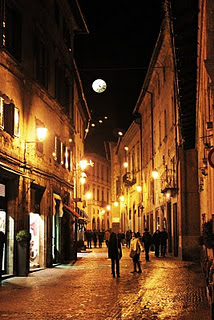
As if deposited by a time machine from the past, Medieval Orvieto is a contradiction of ancient and modern, a paradox of now and then; a throwback to a simpler era. Centered near the birthplace of the Cittaslow movement (whose logo, coincidentally, is a snail), life inside these tufo walls moves at an easy pace – causing one’s blood pressure to plummet and heart rate to slow.

Orvietani march to a dreamy drummer and are not particularly in a hurry to get where they’re going. In this village, lunchtime lasts 3 hours and includes a nap, and buying a stamp can take almost as long as the letter’s journey to its destination. One’s social life is not planned too far in advance, but typically made up of chance encounters and spontaneous invitations.

Its unique cocktail of sophistication and culture is unusual for a town of its size and population, however, before you decide if Orvieto is the right place for you, ask yourself this important question: “Do I crave the excitement of metropolitan life?” If the answer is yes, buy yourself a one-way train ticket to Rome, because “hustle and bustle” definitely don’t live around here.

by Toni DeBella

Read Full Post »

During this entire month of November Bootsnall is inviting bloggers from around the world to participate in 30 Days of Indie Travel : a daily blogging effort to look back on our past travel experiences.  Trying desperately to keep up with my fellow bloggers (failing miserably), I am reposting this piece from April 2011.  My justification for the short-cut – I am being “Green” – Reduce, recycle, reuse!!!!  Today’s Topic: BUDGET.  Here is TRAVELING ON A BUDGET “ALLA TONI”…

One of my great fortunes in life is having two close friends who work as Flight Attendants for major international airlines.  These two women both collectively and single-handedly enable me to feed my addiction to Italy (or as I sometimes like to refer to it, “my crack”).  The companion fare or “buddy pass”: a way of traveling that is not for the faint of heart.  It requires nerves of steel, the patience of Job, the imagination of Sherlock Holmes, and the ingenuity and resourcefulness of MacGyver.  It also helps to have an innate ability to build alliances and form coalitions with the other “buddies” in line for the few choice “non-revenue” seats.  It’s sort of like “Survivor”, but in an airport.

Companion fares are a fraction of the cost of a regular ticket, but as the old adage goes, “You Get What You Pay For.”  Don’t misunderstand me, I am eternally grateful to my friends for sharing their privileges with me.  However, if you are planning to travel this way you must go in with your eyes wide open and accept its cruel game of “standby roulette”.  I have sat many a time at the gate testing the theory that I can telepathically compel myself onto the airplane by chanting  over and over again “please call my name, please call my name, please call my name” like some twisted mantra, in an effort to will the gate agent, (who’s forehead I have just burned a hole through) to say those seven magic words, “passenger DeBella, please come to the podium”.

Ah, the sweet glory of nabbing a seat in business class from New York to Rome! Warm nuts, champagne, fluffy socks, a blanket made of natural fiber and, the pièce de résistance, a seat that reclines almost flat.  Once you have flown business class, it’s hard to return to coach.  In the back (an airline industry term for “where the losers sit”) I feel like an immigrant crammed into steerage on the Titanic.  Should things go awry, I am convinced any real lifesaving procedures will be afforded to the platinum American Express cardholders first.  But I’m not thinking about that today – today I am one of them.  The cabin crew addresses me as Ms. DeBella.  “Ms. DeBella, what would you like as your entree?” “Ms. DeBella, would you like a warm towel?” “May I get you another pillow, Ms. DeBella?” They don’t call it business class for nothing.

But there’s a dark side to “standby, non-rev” (another airline term for “cheapskates who sponge-off their friends and family”).  I’ve been stranded in Milan for 3 days (my traveling companion was a high-strung, hot-tempered, not-so-easy-going Italian – very stressful!), Rome – 3 days (I finally resorted to tears and someone took pity on me), New York – 5 days (Icelandic volcano eruption – seven million other passengers and me marooned, so I don’t really count that one).  I have slept overnight on a bench in a food court at Frankfurt airport, aligned with 8 other rebuffed “buddies” (we filled an entire B&B in Fumicino, Italy) and naively accepted an offer from Domenico, a complete stranger I sat next to on a flight from Hahn to Campino, to drive me to Orvieto on his way to Viterbo.   He could have been an ax-murderer, but as it turned out, he was a really lovely guy.

The bottom line is I will take the opportunity to travel anyway I can get it.  I love airports – they are happy places for me.  When I am in one I’m either going somewhere far away or returning from a wonderful and unique adventure.  It’s certainly challenging to fly around the world without a structure or a guarantee.  Honestly I sort of enjoy the game – it feels like a test of my character and determination.  Over the years I have managed to overcome a lot of obstacles, so perhaps the hardships make arriving at my destination all the more satisfying.  So, like the title of this blog implies, I will beg, borrow and steal to get where I am going.  Buon Viaggio!

Read Full Post »

Starting late Tuesday, torrential rains caused devastation from flash flooding in Northern Tuscany and the Ligurian Coast.  I am reposting “Le Cinque Terre: Walk of my Life” as a tribute to one of the most beautiful places in Italy and to draw attention to the need for help for its victims. Towns, especially along the coast, have been cut-off and are without basic services such as water, food and electricity.  Hardest hit were the communities of Borghetto di Vara, Monterosso Al Mare (Le Cinque Terre), Lunigiana, and Aulla.  9 people lost their lives, several are still missing and many were left homeless.  Following the rescue operations, the need for assistance will be great.  If you’d like to help, here is how you can donate to this relief effort. [Published today in the Corriere della Sera (translated into English)]: 

“The Corriere della Sera and the Tg La7 have promoted a fundraiser to help those affected by bad weather in eastern Liguria and Lunigiana. Payments can be made ​​to account 100 000 000 567 05 061 03 069 EN 80 O, indicating how beneficial “A help right away. Flood eastern Liguria and Lunigiana “at Banca Intesa Sanpaolo, a subsidiary of Rome, Viale Lina Cavalieri 236

TELEPHONE SOLIDARITY – From Thursday is open from 19:30 to the “solidarity number” 45500 to send text messages from cellular TIM, Vodafone, Wind, 3, and Tiscali Postemobile calling from a landline or Telecom Italy, Fastweb and Tiscali and TeleTu (Coopvoce Noverca and activate the numbers from Friday morning at 8). The value of the donation for each message is 2 euros. The number will remain active until November 28.”

Click here for the link to Corriere della Sera’s original post:http://www.corriere.it/cronache/11_ottobre_26/raccolta-fondi-alluvione-corriere-la7_20182ee8-000f-11e1-9c44-5417ae399559.shtml
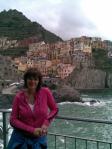
I come back to Orvieto – at least two times a year, but I have always wanted to make the journey to Le Cinque Terre, so this trip I decided to drag myself away from “La Rupe” for a few days and head for the Ligurian Coast.  Winter is a good time to avoid the usually crowded trails of the high season and the sweltering heat of summer.

It was an easy 4½ hour train ride from Umbria, changing trains only once in Florence.  It was raining lightly, but that only added to the atmosphere of towns perched on the rocky Ligurian coast.  In La Spezia I met my friend Angelo, who lives and works in Torino (3 hours north).  His train was an hour late so I waited in the bar at the train station.  He finally arrived and we caught the train to Monterosso al Mare where we had reserved rooms at B&B Arcobaleno (rainbow).  After unpacking, we met up to walk the promenade that lines the beach to the antique section of town.  We found an outdoor cafe and sat down for two glasses of proscecco.  It started raining but we were protected by a large awning.  Incredibly, the train that carries people between the five villages drove right over our heads!!!  A seafood restaurant was recommended to us by Chiara, the proprietor of the B&B.  (In Italy if you mention the B&B that recommends it, you get a 10% discount on dinner).  We were both famished so we ordered too much food.  I had ravioli with spinach in a walnut cream sauce, Angelo had pasta with pesto (a specialty of Genova – just an hour north).  We shared mixed, deep-fried seafood (the famous Anchovies of Monterosso, are a local specialty that have a Protected Designation of Origin status from the European Union.)  Two glasses of Lemoncello completed the dining experience and we were off to bed…we had a big day ahead of us.In the morning there was not much sun, lots of clouds, but fortunately no rain and the temperature was pleasant for our long trek.  We took the train to the first town, Riomaggiore where we purchased a pass that includes access to the paths as well as unlimited train trips between Riomaggiore and Monterosso.  We walked the main street that leads to the sea.  Colorful houses were stacked on top of each other like a crowd of people trying to push against one another to see the view.  And what a view it is!  Red, green, yellow and blue fishing boats lined the small harbor and men were fishing from the rocks (reminding me of my father and his love of fishing).  Did their wives send them out for fish like American wives send their husbands to the supermarket?

We began our hike at the “Via Dell’Amore (Love Walk) which cuts along the cliffs above the calm sea below.  Much like the famous bridge in Rome, Ponte Milvio, lovers hang locks on the nets attached to the rocks, writing their names to declare their undying love.  Normally you could walk from the end of the Via Dell’Amore to the Sentiero Azzurro (“Light Blue Trail”), the trail that connects the five villages, but today the trails were closed because of rock slides so we caught the train to the next towns of Manarolaand Corniglia.  The walk to Corniglia from the station was a long switch-back road, so we jumped on the bus that ferries tourists into town.  Angelo and I decided to buy a couple of sandwiches, a bottle of wine and eat our lunch on the beach, but it was not meant to be.  Both Markets that make sandwiches were out of bread…we waited too long!!!  Instead we ate our lunch at a bar and eavesdropped on the local’s stories to one another.   Ligurians seemed to be a very calm and easy-going group.  With lunch finished, off we went…there was much more to see.

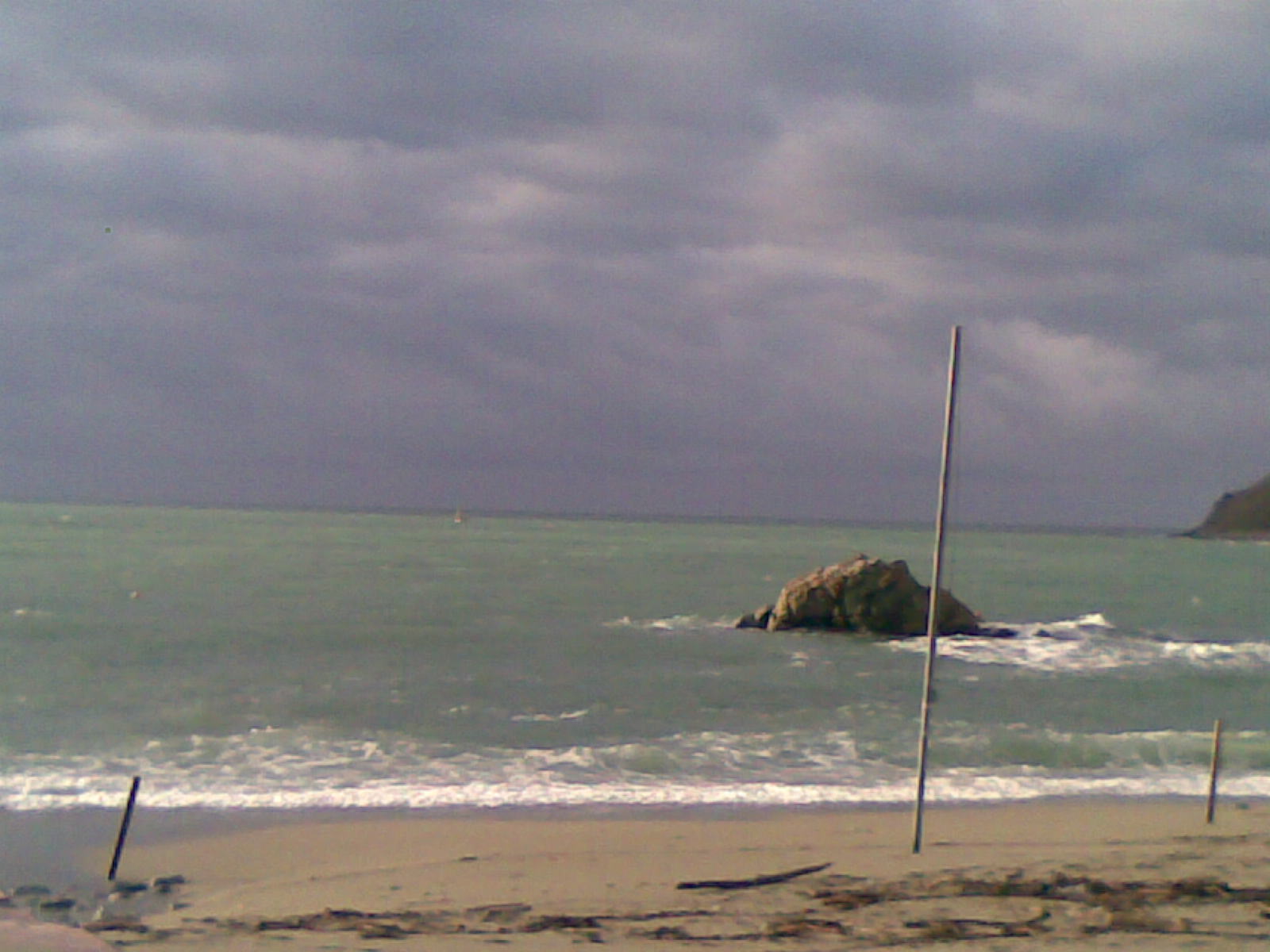
Vernazza is the liveliest of the towns.  All the brightly colored boats are parked in the middle of the piazza….so beautiful.  We took our cappuccinos outside on a bench while watching the waves crash onto the rocks…I would still be sitting there now, but it was getting dark and we needed to return to Monterosso by sunset.  After a long day, we took a break and met up that evening for a pizza in the antique part of town again.  Not wanting to destroy all the good effects of walking, we ordered pizza Margheritas and shared a dessert of sweet panini filled with Nutella – perfectly coupled with the house red wine.  We walked slowly back to Arcobaleno, not because our legs were tired and tight (they were), but because we wanted to enjoy the picturesque walk with its soft lamplights and the moon’s reflection on the large rock in the sea near the shore.  Saturday night in Monterosso al Mare is much like other towns in Italy with locals out for a “passeggiata” – children running and playing while their parents and grandparents stop to talk to their neighbors.
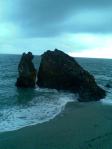
The next morning we were sorry to leave, but the train ride to La Spezia travels along the sea, periodically under the darkness of a tunnel, but then back out to see the magnificent “Mediterranean” again.  My only regret is that my camera’s battery was low and although I took photos with a disposable camera I bought from a shop in town, I am not sure I was able to capture this Ligurian dream…..we will see what “develops”.

Leaving Umbria this trip, I had an opportunity to see how diverse and unique each region of Italy can be from the other.  I loved Liguria and I hope to come back someday and spend more time learning about its customs and traditions.

Read Full Post »

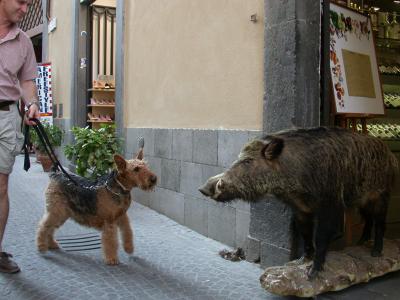
He keeps company with movie stars, famous athletes, powerful politicians and royalty. Children love him but dogs are a little intimidated by his strength and confidence. He’s very charming and blessed with a certain “savoir faire” that draws beautiful women to him – they vie for a chance to stand next to him, but he prefers that they not muss his hair. He is always gracious, if not just a bit aloof.  He tries never to refuse an admirer’s request to take a photograph with him because he doesn’t want to disappoint or appear snobbish. His reputation precedes him. He is the most recognized, popular and interesting man in Orvieto.

Il cinghiale” (the boar) holds court everyday outside Carraro, C. Cavour 101 (☎0763 34 28 70; carraro@orvieto.tin.it), just a few meters down the Corso from where the Via Del Duomo intersects with the Torre del Morro.

Dog v. Boar – Photographed by A. Teich; http://www.pbase.com/al309/italy

Photo of Viola and Paloma by Linda Martinez


by Toni DeBella

Read Full Post »

“I find television to be very educating.  Every time somebody turns on the set, I go in the other room and read a book.”  –Groucho Marx

Television as a way to learn a foreign language is by no means a new concept.  Since its inception in the late 1940s, newcomers have been using TV as a means to help them absorb their new language, and more importantly, to assimilate into their new culture.  The conventional wisdom of linguists is there’s no relationship between watching television and mastering a language.  I beg to differ.  Based on only nonscientific anecdotal evidence (me), I assert that watching TV is a super supplement to other means of learning because it gives the viewer verbal as well as visual cues.  You can look at it as a “workbook” in a box.  With respect to colloquialisms that are spoken in everyday life, what better place to soak up slang than from a reality show or afternoon soap opera?  After all, if it’s your intention to fit in and become part of your community, you’ll want to become familiar with the common vernacular.

Pantofolaio (Couch Potato) Beware!

Of course, it’s important to take an interactive role in your “boob tubing”.  Passively sitting back and letting the information wash over you isn’t going to cut it.  Obviously television alone cannot replace formal training in grammar and vocabulary.  However, if used deliberately and thoughtfully, TV can be an effective way to enhance your proficiency in three particular areas: pronunciation, commonly used expressions/vocabulary and popular trends.

Italian All day, every day

Wake up and turn on your television set.  You don’t necessarily have to be watching it to get the benefit – the background noise of Italians in conversation is seeping in.  By bombarding your brain with the spoken word, you can train your “ear” to the musical rhythm and cadence of this beautiful language, and repeating words and phrases out loud helps with pronunciation.  It’s like gymnastics for your tongue – reminding you of the importance of enunciating each and every letter to avoid changing a word’s meaning entirely, i.e., penne (a kind of pasta) and pene (penis).  Otherwise, dialogue at the supermarket could get pretty interesting.

Are you listening to me?

Eavesdropping in public places – awkward.   Watching a talk show in your living room – a much more relaxing way to pick up idioms in context (and with the accompanying hand gestures).  Once I’d heard a phase used over and over, I would ask a friend its meaning and how to use it.  For example, “Secondo me” came up a lot on political talk shows.  I learned that it meant “in my opinion/in my view”.  Once it made sense to me in its proper context, I could begin using it with confidence in my own conversations.

Around the Water Cooler

You get a pretty good idea of the political climate of the country, its mores, values and attitudes with a healthy diet of current affairs programming.  Who and what are in fashion can easily be gleaned from entertainment news and nighttime talk shows.


CATEGORICALLY SPEAKING…Types of Shows that give you the most “bang for your buck”:

#1 – Trivial Pursuit (Trivia Shows)

Millionario is one of my favorites.  Gerry Scotti, (the Ryan Seacrest of Italy) hosts this country’s version of “Who Wants to Be a Millionaire”. The beauty of this show is that along with the questions posed to the contestant, you can read the question and possible answers on the screen. Are you a genius in English and Italian?

#2 -Games People Play (Game Shows)

La Routa della Fortuna is the Italian “Wheel of Fortune”Enrico Papi is clever and better looking than Pat Sajak, but the real fun is kooky Victoria Silvstedt, a former Swedish Playboy Playmate ( “Vanna White‘s” counterpart).  It turns out crossword puzzles are a lot easier in your native tongue.   This show is a surprising mixture of trash TV and educational programming rolled into one crazy format.  A wacky way to learn vocabulary!

#3 – Series, Seriously (Episodic Series)

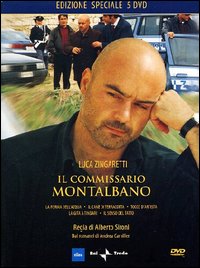
There’s a plethora of serial dramas and sitcoms – many imported from America – that are broadcast weekly (Commissario Montablano, CSI, Law and Order, House, Friends, etc.).  I discovered that you can set most televisions to the closed captioning mode which allows you to watch and read the programs in Italian at the same time.  It really works!

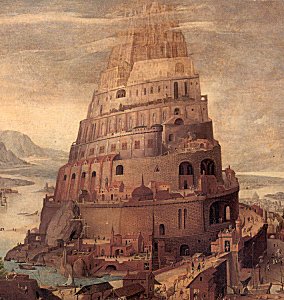
Television Tower of Babel

It all comes down to one thing: communicating.  It seems television has become our modern day Tower of Babel that works to promote understanding by uniting people while acting as a sort of cultural equalizer. TV can make the world seem not just smaller, but downright miniscule.  So, stay tuned!
by Toni DeBella

Read Full Post »

I have never been overly-superstitious and take great pride in my healthy cynicism.   I don’t throw salt over my shoulder or avoid black cats.  As a muralist, I walk under ladders frequently and don’t believe I have ever fallen victim to the evil eye.  Thinking or saying something out loud does not make it come true.  If it did, I’d be a size 6, rich and living in a palazzo in Orvieto.  But I digress.

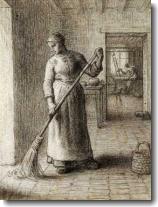
My grandmother was normally a very serious and solemn woman.  One day a year she would transform into a madwoman, wielding a broom and running in circles shouting and screaming like a banshee in an effort to ward off the evil spirits who had apparently taken up residence in our cellar.  It was spring cleaning run amok.  I don’t know much about the tradition that had this small, fragile and shy lady fearlessly take on a bunch of ghosts in the basement of our house.  I wonder if it was folklore passed down from her childhood in Contessa Entellina, a small Sicilian town 80km from Palermo.  I did a little research and found quite a few references to sweeping away evil spirits with a broom — a common practice especially among southern Italians, but was unable to find any mention of the “screaming and running around” part.  Perhaps that was my grandmother’s own personal stamp on the custom.

Superstitious Minds

A superstition is a belief in something that has no rational foundation in science and is most often based on the prevailing religion or culture that contains these otherworldly beliefs.  The word comes from the classical Latin superstitio, meaning “a standing over [in amazement]”.  Greek and Roman pagans were believed to have scorned men who displayed a fear of the gods and thus, the behavior came to be referred to as superstition. This could explain why Greeks and Italians are famously known for their mythology and have a common legend in the “evil eye” – Malocchio in Italian, Mati in Greek.

Hope-On-A-Rope

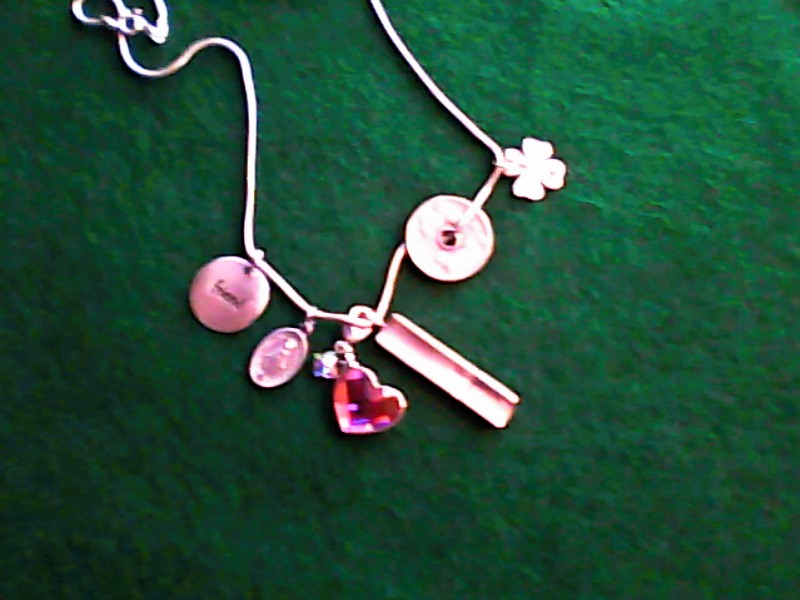
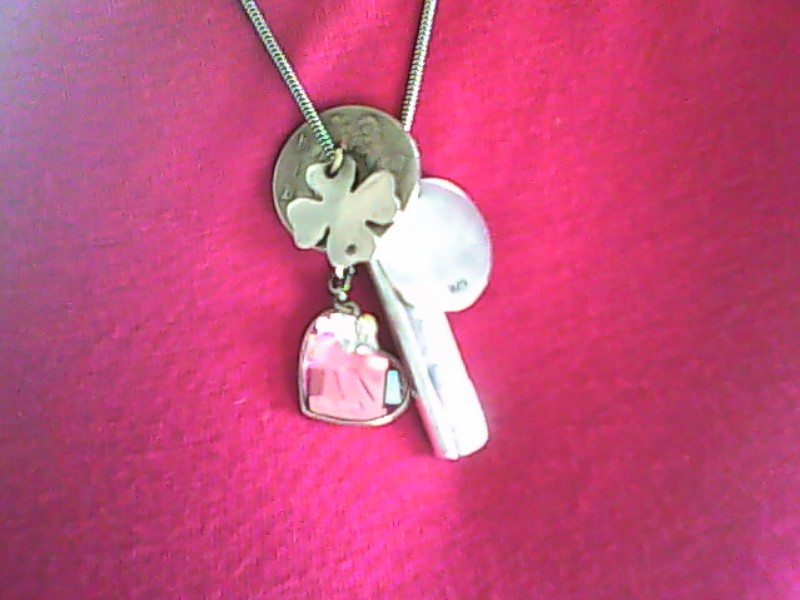
When I wrote earlier that I am not particularly superstitious, I wasn’t being completely honest with you.  The fact is that in the last few years I have come to believe a certain necklace I own has developed supernatural powers that, if worn daily, will someday bring me good luck.

It started out as a simple chain with a silver bar hanging from it.  One afternoon while in St. Peter’s Square I looked down to see something glittering in the sun.  I removed it from between the cobblestones to discover it was a tiny medallion of the Madonna.  Convinced this was an omen, I instinctively hung it onto my necklace.  A birthday present of a charm with the word “Friend” engraved on it followed — then a Chinese coin and a 4-leaf clover.  On one arrival in Rome I wrote the message to my friend Angelo, “Io sono in Italia…mi sento come una farfalla” (I am in Italy…I feel like a butterfly).  When he presented me with the gift of a tiny crystal butterfly dangling from a pink heart of course I had to add it to my collection.  This “chain of fortune” is getting rather heavy!

Out of the 365 days in a year, I probably wear the necklace 360 of them.  The other 5 days I just don’t feel quite right without it.  Could I have inherited from Grandma this propensity to make weak associations of cause and effect where there are none?  What can I say? I don’t like tempting fate.  Writer Judith Viorst said it very well: “Superstition is foolish, childish, primitive and irrational — but how much does it cost you to knock on wood?”
by Toni DeBella

Read Full Post »

Twenty years from now you will be more disappointed by the things you didn’t do than by the ones you did do. So throw off the bowlines, sail away from the safe harbor. Catch the trade winds in your sails. Explore. Dream. Discover.” – Mark Twain

In a perfect world there would be no boundaries and we would all be citizens of the world, free to roam from place to place at our heart’s desire. Until that day comes, you’re going to need a government-issued passport.

Passport 101

King Henry V of England, most noted for his great military mind is also credited with inventing what is considered the modern version of the passport. Earlier references to the passport have also been found in the Hebrew Bible. In medieval Europe a document was required in order to pass through the gates of a city wall or traverse a territory.

American in Paris?

The latest statistic regarding the percentage of Americans (less than 30%) who own passports is a little sobering and quite frankly, a bit suspect. I disagree with the popular assumption that Americans are fundamentally unadventurous, isolation-loving people without a global perspective. I assert that the low number of passports issued is misleading and actually a reflection of many mitigating factors including: 1) The geographical make-up of the United States. It is a vast, diverse land filled with amazing places (national parks, big cities, beautiful beaches, majestic mountains, etc.,) that keep Americans sightseeing within its borders; 2) The U.S. neighbors only two other nations, unlike Europe which has nearly a total of 50 border-crossings on its continent. For example, an Austrian boards a one-hour flight or sets out on an eight-hour car trip and reaches a myriad of foreign countries. A one-hour flight from San Francisco takes me as far as Los Angeles, Las Vegas, Portland, and somewhere in the middle of the Pacific Ocean; 3) If you are a member of the working middle-class it is likely you have only two-weeks vacation a year and on top of that; 4) foreign excursions can be quite expensive.

But for those who choose to hold a passport, they hold unlimited possibilities in their hands. This tiny book has power. With it you have permission to pick-up and jet-off to strange and exotic locations at a moments notice. My son has let his passport expire and I am continually nagging him to get it renewed. “You never know when you might need to fly to Paris for lunch”, I say. He rolls his eyes. He’s right, this situation doesn’t come up too often – but it never hurts to be ready just in case. As for me, I caught the “travel bug” later in life and I caught it with a vengeance. Just recently I renewed my passport and sweated those few weeks without it. It was a relief to find it in the post safe and sound. I look forward to the next 10 years of gallivanting.

My recent passport is only the third in my lifetime. Growing up in our family meant we never ventured farther than our Ford Country Squire station wagon could take us. In college, I went to Mexico quite a few times, but back in “the day” you weren’t required to carry documents to go south or north of the border. In 1982 I took my first international flight to Sydney, Australia for a friend’s wedding and joined the prestigious group “world traveller”. Since that time I’ve been to only a handful of different countries: Mexico (twice), Costa Rica, The Bahamas, England (twice), Germany (twice) and of course, Italy (dozens of times). In two months time I will be adding France to that list. My Passport Personality: Late Bloomer.

On this ever-changing, fluid planet it is nearly impossible to maintain an accurate list of countries in the world. The Travelers’ Century Club has compiled a “Master List” of countries, territories, autonomous regions, island groups, states and provinces that theoretically make up the world. Currently there are 872 places pinpointed. No one person has visited them all, but a few have come close. My friend Marisa is in her 30s and has one of the most impressive passports I’ve ever seen. (The photo at the top is from a page in her actual passbook). She considers it among her most prized possession. She’s travelled since she was a baby and in her teens and early 20s lived many years abroad (both on land and on boats). She is now gainfully employed as a maritime attorney, so her globe-trotting has stalled a bit. But deep down inside she will always have the heart of a vagabond and wanderlust in her veins. Her Passport Personality: Marco Polo.

So, what does your passport say about you?

by Toni DeBella

Read Full Post »

February, 2009

A friend was visiting on a sunny, frigidly cold winter’s day when most people would have preferred to stay indoors and keep warm. Not us. We hopped on a bus that dropped us in Bagnoregio, then hiked up to the footbridge to the top of Civita’.

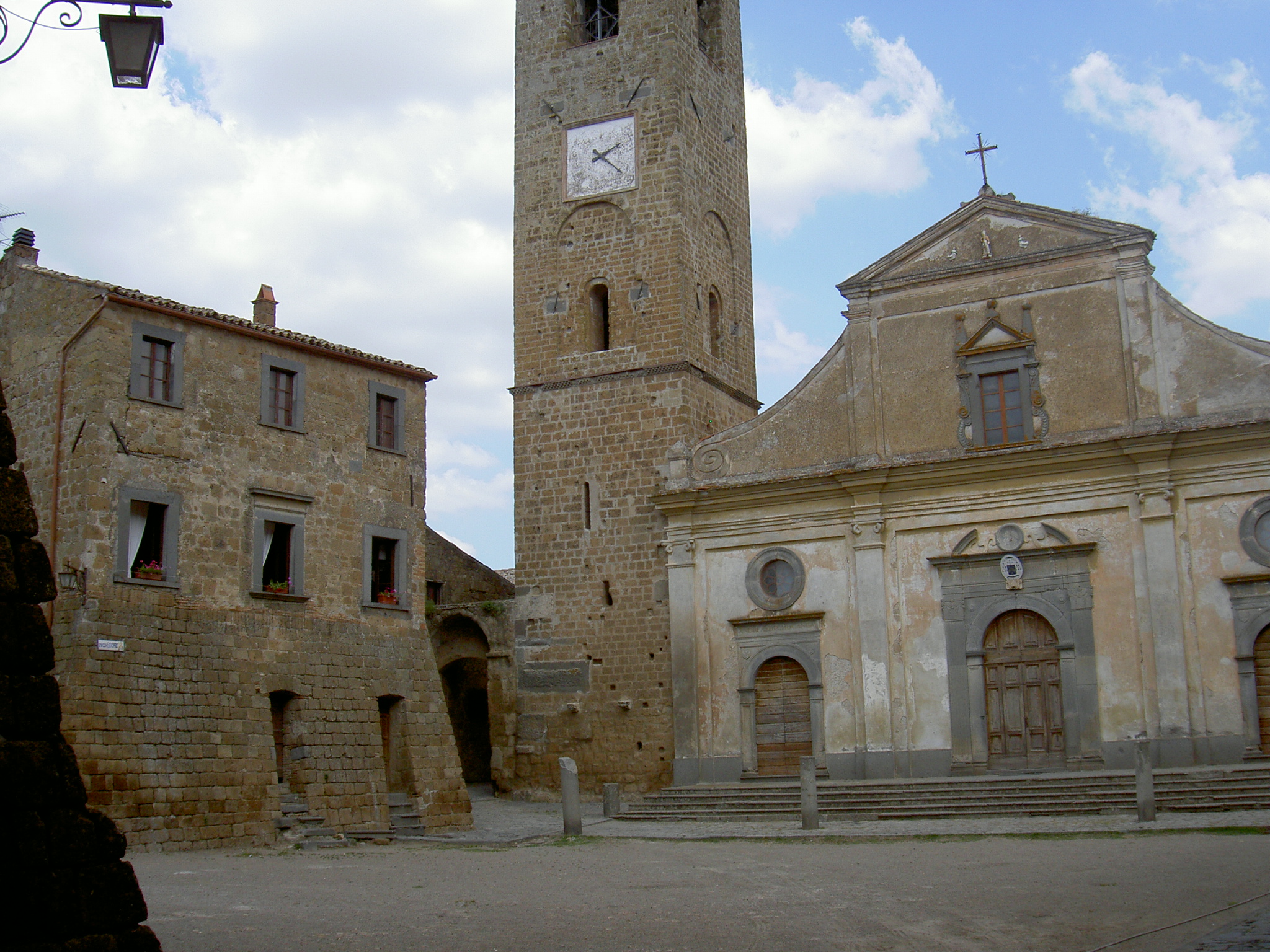
CivitaCivita’ di Bagnoregio (“the dying town”) is located 145km north of Rome in the region of Lazio, overlooking the Tiber Valley. The village seems to float above the earth in a cloud, but has the unfortunate distinction of being one of the world’s most endangered places; the town is slowly crumbling and sliding down its cliffs.

This little borgo has always had a strange allure for me (as it has, I’m sure, for millions of others who have experienced visited). The atmosphere that day was a little eerie because there didn’t appear to be any other souls in town (except  two ambling cats in the main square). It’s a favorite stop of tourists in the spring and summer, but on this February afternoon, the streets were quiet and deserted; underscoring the heartbreaking reality of the city’s inevitability. I’ve visited Civita’ three times in my life. The first was as a tourist. The second was as a dinner guest at the home of a friend (which was pretty amazing considering there are only a dozen residents remaining in this little hamlet). My last visit was by far the most memorable.

A small sign hanging in a courtyard is the only indication that there’s a thriving business inside a grotta at the end of the enchanting patio. Bruschetteria L’Antico Frantoio is too tiny to be called a cafe’, and the menu is too limited to be a restaurant – so it’s simply called a “bruschetteria”. I imagine it’s like no other bruschetteria in Italy. The Rocchi family has been operating this iconic destination of travelers for decades with its 1500 year-old olive oil mill (frantoio) in the back. The mill, which still functions (although it’s retired) has been in the family since 1520. Today, the family’s Agriturismo “Le Corone” in a valley nearby produces all of its oil.

On this day, Felice Rocchi was our host and chef. A remarkably efficient use of space, there is only a fireplace to grill the bread, a counter to assemble and serve the bruschetta and wine, and a few tables covered in tablecloths. I think we were Felice’s only customers that day and since we were in no hurry to return into the freezing wind, the three of us passed a very pleasant afternoon talking and eating the most amazing olive oil-soaked bruschetta and drinking the freshest house red wine. We chatted about Felice’s family, got a private tour of the Etruscan well in the cantina, and together devised a kooky plan to help bewildered Jtourists how and what to order. He promised us a cut of the projected profits from our little scheme, but I think when I return, I’ll ask for my share to be paid in bruschetta.


by Toni DeBella

Read Full Post »

One of my great fortunes in life is having two close friends who work as Flight Attendants for major international airlines.  These two women both collectively and single-handedly enable me to feed my addiction to Italy (or as I sometimes like to refer to it, “my crack”).  The companion fare or “buddy pass” is a way of traveling that’s not for the faint of heart.  It requires nerves of steel, the patience of Job, the imagination of Sherlock Holmes, and the ingenuity and resourcefulness of MacGyver.  It also helps to have an innate ability to build alliances and form coalitions with the other “buddies” in line for the few choice “non-revenue” seats.  It’s sort of like “Survivor”, but in an airport. Companion fares are a fraction of the cost of a regular ticket, but as the old adage goes, “You Get What You Pay For.”

Don’t misunderstand me, I am eternally grateful to my friends for sharing their privileges with me, however, if you’re planning to travel this way, you must go in with your eyes wide open and accept its cruel game of “standby roulette”.  I’ve sat many a time at the gate testing the theory that it’s possible to telepathically compel myself onto the airplane by chanting over-and-over-again, “please call my name, please call my name, please call my name” (like some twisted mantra to will the gate agent (who’s forehead I’ve just burned a hole through) to say those 7 magic words, “passenger DeBella, please come to the podium”.

Ahh, the sweet glory of nabbing a seat in business class from New York to Rome! Warm nuts, champagne, fluffy socks, a blanket made of natural fiber and, the pièce de résistance, a seat that reclines almost flat.  Once you’ve flown business class, it’s hard to return to coach.  In the back, (an airline industry term for “where the losers sit”) I feel like an immigrant crammed into steerage on the Titanic.  Should things go awry, I’m convinced any real lifesaving procedures will be afforded to the platinum American Express cardholders first.  However, I’m not thinking about that today – today I’m one of them.  The cabin crew addresses me as Ms. DeBella: “Ms. DeBella, what would you like as your entree?” “Ms. DeBella, would you like a warm towel?” “May I get you another pillow, Ms. DeBella?” They don’t call it business class for nothing.

volcano

But there’s a dark side to “standby, non-rev” (another airline term for “cheapskates who sponge-off their friends and family”).  I’ve been stranded in Milan for 3 days (my traveling companion was a high-strung, hot-tempered, not-so-easy-going Italian – very stressful!); Rome – 3 days (I finally resorted to tears and someone took pity on me); New York – 5 days (Icelandic volcano eruption – 7 million other passengers and me marooned, so I don’t really count that one).  I’ve slept overnight on a bench in a food court at Frankfurt airport, aligned with 8 other rebuffed “buddies” (we filled an entire B&B in Fumicino, Italy) and naively accepted an offer from Domenico (a complete stranger I sat next to on a flight from Hahn to Campino) to drive me to Orvieto on his way to Viterbo.  He could have been an ax-murderer, but as it turned out, he was a really lovely guy.

The bottom line is…I will take the opportunity to travel anyway I can get it.  I love airports – they’re  happy places for me.  When I’m in one, I’m either going somewhere far away or returning from a wonderful and unique adventure.  It’s certainly challenging to fly around the world without a structure or a guarantee. Honestly, I sort of enjoy the game – it feels like a test of my character and determination.  Over the years, I’ve managed to overcome a lot of obstacles, and maybe those hardships make arriving at my destinations all the more satisfying.  So, like the title of this blog implies, I will beg, borrow and steal to get where I am going.  Buon Viaggio! by Toni DeBella

Read Full Post »

Each Pentecoste Sunday for centuries, a large crowd gathers in front of the Duomo di Orvieto to celebrate the Festa della Palombella. Despite the condemnation of animal rights advocates, a dove is placed in a plexiglass “space capsule” and launched on a zip-line across the Piazza. It arrives at the specially constructed cenacle with great fanfare of fireworks, red flames and clouds of smoke. The dove symbolizes the descent of lo Spirito Santo (the Holy Spirit) on the Apostles. It’s said that if the dove survives the traumatic journey, it portends a year of good crops and fertility for the city’s most recently wed couple, who vow to care for the dove until its natural death.

Apparently, this year “la colomba” had other plans! Somehow the container had opened prematurely and amidst a cheering crowd, the dove made her daring and defiant escape – literally and figuratively – she “flew the coop”. The question remains: If a “surviving” dove signifies a year of favorable crop yields and a “deceased” dove predicts a weak harvest, then it’s good news for farmers since a liberated dove is certainly “alive and well”.

But what is the fate of the newlyweds who were deprived of their blessing of peace and fertility? I have no doubt that every bar in town is humming with speculation about this twist of fate! The discourse and theorizing could go on for the next 365 days!
by Toni DeBella

Read Full Post »

« Newer Posts - Older Posts »