Feeds:
Posts
Comments

Archive for the ‘Expat in Italy’ Category

Luke Joseph DeBella: 1917 – 2004

As the 10-year anniversary of my father’s passing comes and goes, I have been thinking a lot about him and of the legacy he left behind.  To say that he was my role model and hero seems trite — everyone says that about their father (if they are fortunate enough to have a strong man in their life to lead them into adulthood as I did).  A man of few words, I learned what was most important by watching him conduct himself throughout his life and in his 52-year love affair with my mother.  It was in this manner that I witnessed the qualities I wanted to emulate for myself.  If I could only become half the person that he was…

When my dad was a young man his nieces and nephews used to call him “Uncle Tootsy”.  If you’d ever met this man you’d understand how ludicrous a moniker that was because my father’s reputation as a curmudgeon was legendary.  He could come-off a little scary at first and often caused my friends at school to shiver in their boots.  However, despite his well-executed “tough-guy” persona, once you got to know him you’d soon realized that his “schtick” was designed to hide one of the biggest and warmest hearts on the planet.  Babies in particular adored my father – they were not fooled by his stern, gruff manner – they could see right through him into his soft, mushy center.  My father had more friends than you could shake a stick at.

Dad was born at home in San Jose, California and raised in a house with 9 other siblings by Sicilian immigrant parents.  Not formally educated past the 8th grade, he would religiously read the newspaper cover-to-cover every day and watch the news each evening.  What my father lacked in academic knowledge he more than made up for in an uncanny intelligence for reading people.

At a young age my father learned his trade as a car mechanic and after returning from Europe at the end of World War II, he began an automotive repair business, “Luke and Martin Service”, in an old converted barn behind my grandparents’ house.  When I was a little girl, I never hesitated to take the opportunity to boast about him. If a kid bragged that his father was a brain surgeon, I would shoot back, “Well, MY dad is a mechanic”! He worked in that capacity until he was nearly 75 years old because, I believe, his regular customers refused to let him retire.  A good, honest and trustworthy auto repairman is really hard to come by.

He wasn’t the kind of guy to show off or talk about himself.  He avoided people who put on “airs” or thought they were superior to others.  He valued honor and respected hard work and straight talk.  When I was a teen, he once said to me, “Being rich doesn’t make you happy”.  My response back was, “That’s just what poor people say to make themselves feel better”, and he just smiled.  He was crazy about Westerns (especially John Wayne and Clint Eastwood), and was an avid outdoor sportsman.  By far, his favorite activity was to fish in a boat on a lake with his buddies.  He was so passionate about it that my family had the words “Gone Fishing” carved into his gravestone.  The cheekiness of that gesture would not be lost on him.

I guess the bottom line is that my dad was the “strong, silent type”.  Not very demonstrative – he wasn’t much for talking about his “feelings”.  In all honesty, I don’t remember my father ever saying the words “I love you” to me, however, there wasn’t a day that went by that I didn’t feel loved and cared for by him.  Some people ‘talk the talk’ but he actually ‘walked the walk’ and taught me one of the most important lessons of my life so far: “Love” isn’t a noun, it’s a verb. by Toni DeBella

Read Full Post »

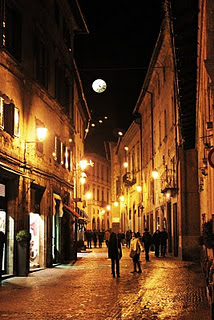
Another visit comes to an end. When I lament to friends about how much I will miss Orvieto, invariably one of them will say to me, “Oh, don’t worry. It will be exactly the same when you return. In Orvieto, nothing ever really changes.” In my absence, I cling tight to the comfort of this statement and hope that what they say is true: In Orvieto, time is suspended.


As if deposited by a time machine from the past, Medieval Orvieto is a contradiction of ancient and modern, a paradox of now and then; a throwback to a simpler era. Centered near the birthplace of the Cittaslow movement (whose logo, coincidentally, is a snail), life inside these tufo walls moves at an easy pace – causing one’s blood pressure to plummet and heart rate to slow.

Orvietani march to a dreamy drummer and are not particularly in a hurry to get where they’re going. In this village, lunchtime lasts 3 hours and includes a nap, and buying a stamp can take almost as long as the letter’s journey to its destination. One’s social life is not planned too far in advance, but typically made up of chance encounters and spontaneous invitations.

Its unique cocktail of sophistication and culture is unusual for a town of its size and population, however, before you decide if Orvieto is the right place for you, ask yourself this important question: “Do I crave the excitement of metropolitan life?” If the answer is yes, buy yourself a one-way train ticket to Rome, because “hustle and bustle” definitely don’t live around here.

by Toni DeBella

Read Full Post »

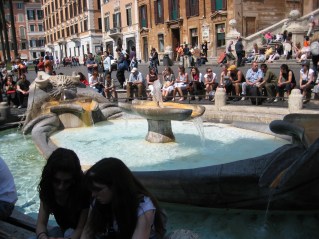
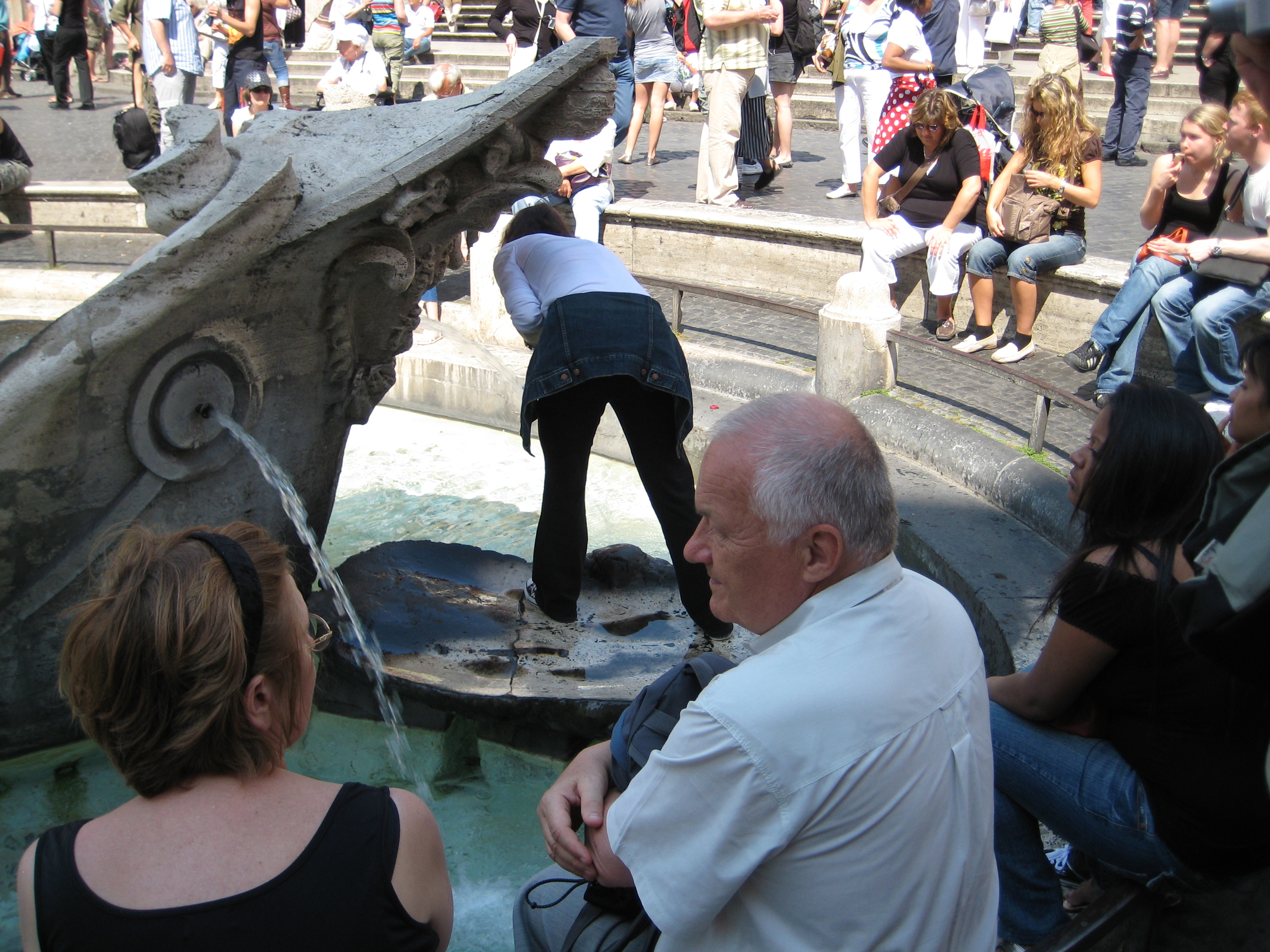
La Barcaccia, Piazza di Spagna

Rome in late summer can have days so stiflingly and oppressively hot you can think of nothing else but the record high temperatures. Everywhere people are in a fever-induced trance, like melting zombies repeating the same phrases to whomever is within earshot: “Fa caldo!” “E’ caldo come un forno!”. With dead eyes we respond only with a weak, “Si, si”.

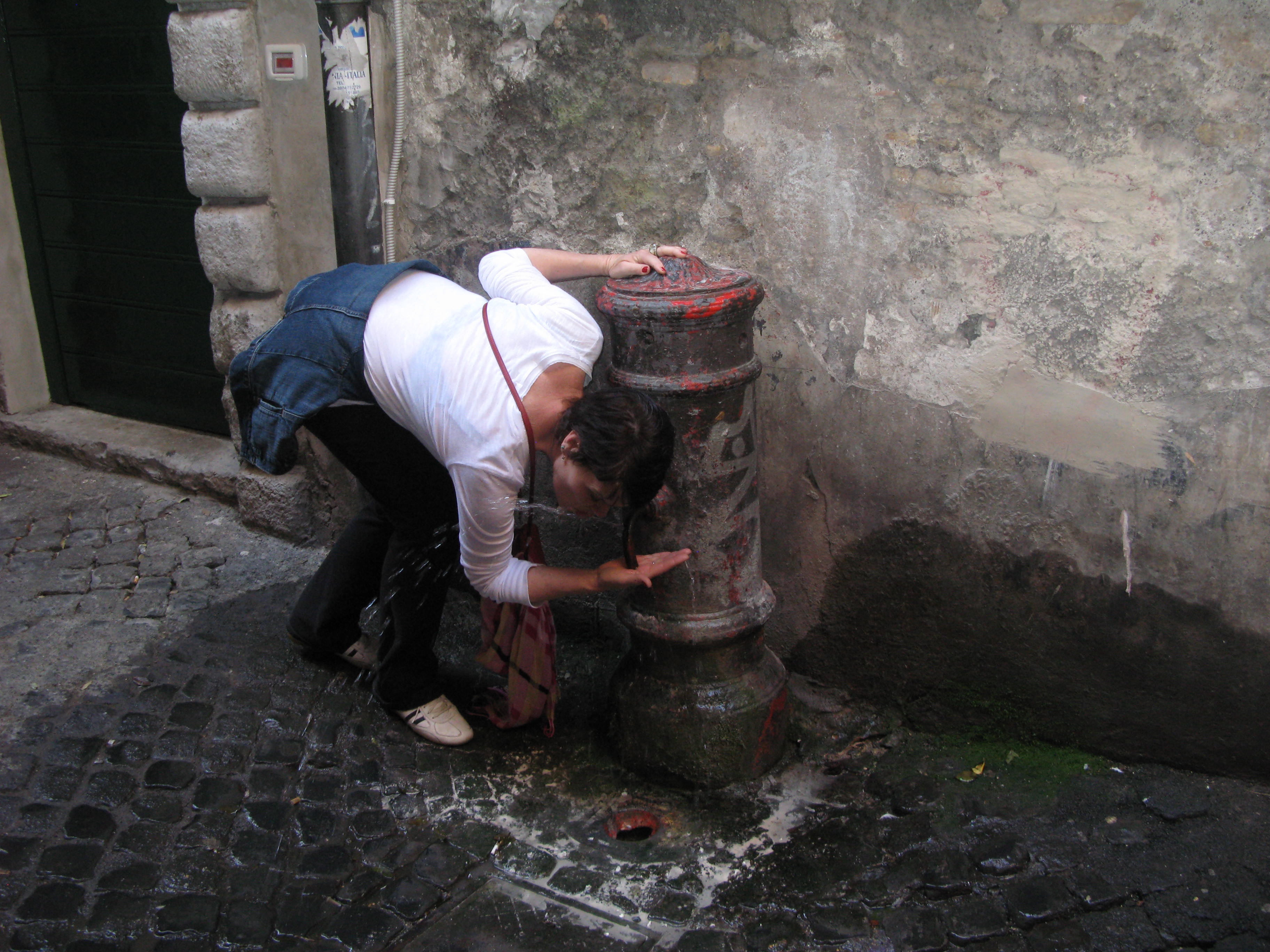
I find a small piece of shade near a piazza and sit down on the curb to rest for a minute. The undulating refraction of air rising from the burning pavement creates a mirage. When I stare at one spot long enough, I think I see a figure of the devil forming above a manhole. Hallucination is the first symptom of heat stroke. The soles of my shoes are melting, the mosquitoes that have been gnawing at my ankles have left large red welts on my skin and I’m so dehydrated that my mouth feels filled with cotton balls. Then, not too far in the distance I see it…a drinking fountain! If I weren’t so faint from the heat and humidity I would run toward it like a nomad to an oasis in the Sahara.

Archaeologists believe that the technology for moving water into and around a city originally came from the east, however Romans are unquestionably credited with perfecting the process (i.e., the invention of the aqueduct). This brilliant engineering feat goes unmatched in the ancient world and earned Rome the distinction of having the most available, purest, best-tasting water on the planet. You’ll find Nasone (big nose) fountains scattered throughout the Eternal City – there are about 280 inside its walls alone. On a scorching hot day like this one, all you need to do is simply bend over, stick out your tongue and take a long, cool drink from its glassy stream. L’Acqua di Roma: Liquid of the Gods!

by Toni DeBella

Read Full Post »

Passion: Day 17 of the 30 Days of Indie Travel Project

During this entire month of November Bootsnall is inviting bloggers from around the world to participate in 30 Days of Indie Travel : a daily blogging effort to look back on our past travel experiences.  Yes, I know I am posting out of order.  Yesterday the topic was passion: what’s yours?

Benjamin Franklin once wrote, “If passion drives you, let reason hold the reins.” Ben and I agree on this point.  My son Andrew often tells me that I have a propensity to perceive things from a romanticized point of view. Conversely, my friend Suzee insists I have a rational, logical approach to life.  So which is it?

I am keenly aware that gone unchecked, my passion for a life in Italy could consume me and morph into a full-blown addiction.   It’s not that I want to discount my emotions in place of reason, but I believe – like the thin line between love and hate – there is a fine balance that must be struck.

We dreamers don’t like to admit that passion can be a double-edged sword – both blessing and curse.  In order to fulfill a dream, something has to give.  “On life’s vast ocean diversely we sail. Reasons the card, but passion the gale.”- Alexander Pope

You might also like:

Renovating Italy’s “An Italian Passion – it’s in the blood”

by Toni DeBella

Read Full Post »

During this entire month of November Bootsnall is inviting bloggers from around the world to participate in 30 Days of Indie Travel : a daily blogging effort to look back on our past travel experiences.  Trying desperately to keep up with my fellow bloggers (failing miserably), I am reposting this piece from April 2011.  My justification for the short-cut – I am being “Green” – Reduce, recycle, reuse!!!!  Today’s Topic: BUDGET.  Here is TRAVELING ON A BUDGET “ALLA TONI”…

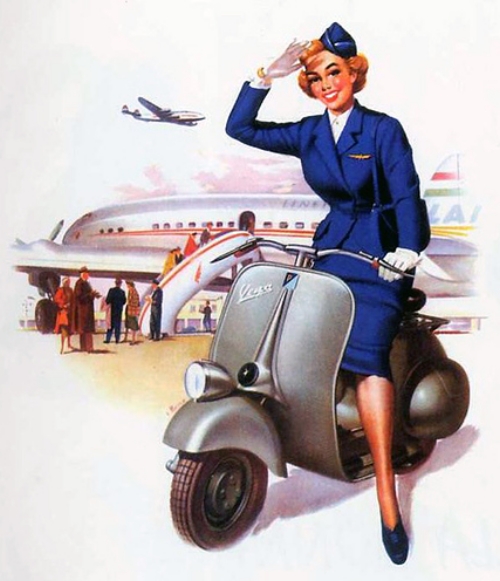
One of my great fortunes in life is having two close friends who work as Flight Attendants for major international airlines.  These two women both collectively and single-handedly enable me to feed my addiction to Italy (or as I sometimes like to refer to it, “my crack”).  The companion fare or “buddy pass”: a way of traveling that is not for the faint of heart.  It requires nerves of steel, the patience of Job, the imagination of Sherlock Holmes, and the ingenuity and resourcefulness of MacGyver.  It also helps to have an innate ability to build alliances and form coalitions with the other “buddies” in line for the few choice “non-revenue” seats.  It’s sort of like “Survivor”, but in an airport.

Companion fares are a fraction of the cost of a regular ticket, but as the old adage goes, “You Get What You Pay For.”  Don’t misunderstand me, I am eternally grateful to my friends for sharing their privileges with me.  However, if you are planning to travel this way you must go in with your eyes wide open and accept its cruel game of “standby roulette”.  I have sat many a time at the gate testing the theory that I can telepathically compel myself onto the airplane by chanting  over and over again “please call my name, please call my name, please call my name” like some twisted mantra, in an effort to will the gate agent, (who’s forehead I have just burned a hole through) to say those seven magic words, “passenger DeBella, please come to the podium”.

Ah, the sweet glory of nabbing a seat in business class from New York to Rome! Warm nuts, champagne, fluffy socks, a blanket made of natural fiber and, the pièce de résistance, a seat that reclines almost flat.  Once you have flown business class, it’s hard to return to coach.  In the back (an airline industry term for “where the losers sit”) I feel like an immigrant crammed into steerage on the Titanic.  Should things go awry, I am convinced any real lifesaving procedures will be afforded to the platinum American Express cardholders first.  But I’m not thinking about that today – today I am one of them.  The cabin crew addresses me as Ms. DeBella.  “Ms. DeBella, what would you like as your entree?” “Ms. DeBella, would you like a warm towel?” “May I get you another pillow, Ms. DeBella?” They don’t call it business class for nothing.

But there’s a dark side to “standby, non-rev” (another airline term for “cheapskates who sponge-off their friends and family”).  I’ve been stranded in Milan for 3 days (my traveling companion was a high-strung, hot-tempered, not-so-easy-going Italian – very stressful!), Rome – 3 days (I finally resorted to tears and someone took pity on me), New York – 5 days (Icelandic volcano eruption – seven million other passengers and me marooned, so I don’t really count that one).  I have slept overnight on a bench in a food court at Frankfurt airport, aligned with 8 other rebuffed “buddies” (we filled an entire B&B in Fumicino, Italy) and naively accepted an offer from Domenico, a complete stranger I sat next to on a flight from Hahn to Campino, to drive me to Orvieto on his way to Viterbo.   He could have been an ax-murderer, but as it turned out, he was a really lovely guy.

The bottom line is I will take the opportunity to travel anyway I can get it.  I love airports – they are happy places for me.  When I am in one I’m either going somewhere far away or returning from a wonderful and unique adventure.  It’s certainly challenging to fly around the world without a structure or a guarantee.  Honestly I sort of enjoy the game – it feels like a test of my character and determination.  Over the years I have managed to overcome a lot of obstacles, so perhaps the hardships make arriving at my destination all the more satisfying.  So, like the title of this blog implies, I will beg, borrow and steal to get where I am going.  Buon Viaggio!

Read Full Post »

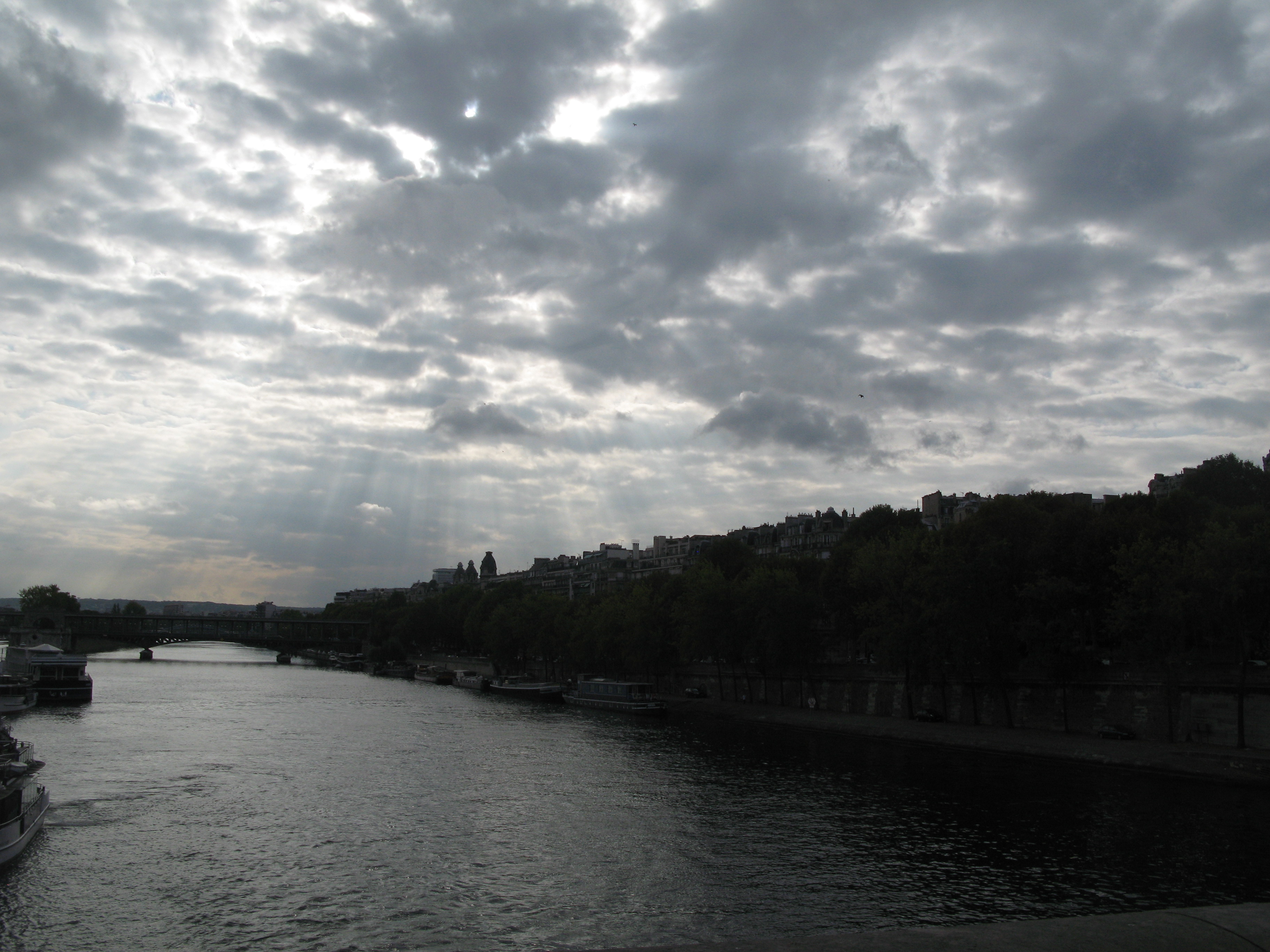
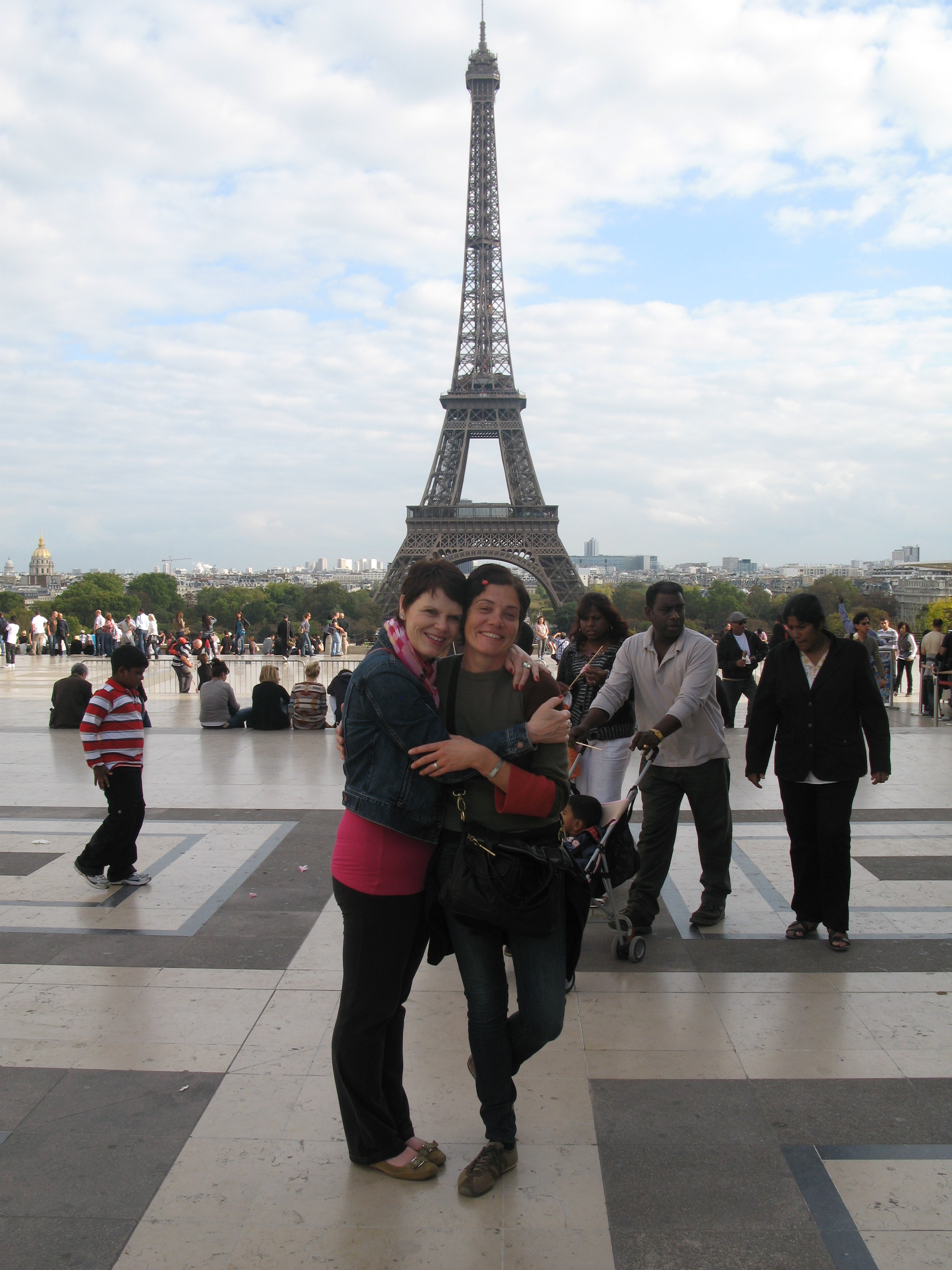
It has been nearly eight months since I’ve last set foot in Orvieto – a really, really, really long time in my book. Each and every visit back to Italy has developed its own particular flavor and personality. This trip took on a special “French twist” because it included a 4-day stopover in Paris.

Paris: The City of Lights.

The Eiffel Tower, Champs-Élysées, Arc de Triomphe, Notre Dame de Paris, Montmartre, Foie gras, French wine and the pièce de résistance, French pastries. I loved this city from the moment I arrived. Parisians are so sophisticated, elegant, romantic, chic, and super COOL. I wanted to be cool just like them so I decided to become French.

Becoming French is not something you can do overnight – it takes a lot of time and effort. I was fortunate enough to be traveling with my friend Manuela, staying with her friends, Christophe and Tiphaine, and hanging out with JC and Stephanie: all Frenchies to the hilt. I had round-the-clock exposure to daily life in France and am happy to pass along some of the secrets to be French that I learned.

Introduction: Fake it ’till you make it.

The first and most important thing you must do in order to become French is to stop being American immediately! You must hide all characteristics that would tip people off that you’re from the United States. (You know you’re making progress when someone accidentally mistakes you for a Canadian). It can be quite challenging, but if you put your mind to it I believe it can be achieved. By reading and following my step-by-step instructions, you too may be well on your way to becoming French, just like me!

5 Easy Steps to “Frenchdom”

Step #1: Shut up about it.

If you don’t speak French fluently then don’t speak at all. (For those of you who know me personally, that was the biggest challenge). If you want to buy something, just point at it and grunt. Even a simple “Merci” will give you away. Believe me, your rudimentary high school French isn’t going to help you here; you might as well write “ugly American” across your forehead in Chanel lipstick, for God’s sake.

Step #2: Enchante`

Greet properly. Never hug anyone! Hugging is a dead give away that you’re not from around here. Give two or three kisses on the cheek; never shake hands when introduced unless you’re in a business setting or meeting the President of France.

Step #3: Look the part

Wear scarves, dress in all black and be short.

Step #4: Smoke

I know smoking is detrimental to your health and makes your clothes and hair smell bad, but if you don’t smoke you’ll be left alone in the restaurant while everyone else is outside smoking cigarettes and laughing. You don’t want that! I’m proud to say that before coming to Paris I didn’t smoke at all and now I’m up to half a pack a day.

Step #5:  Eat, pray, gag

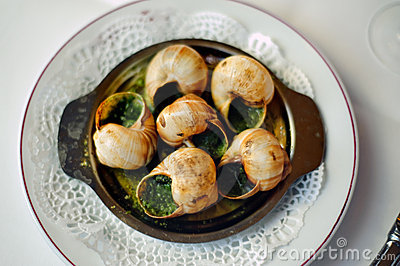
In order to survive one must eat. To be French means you will be consuming large amounts of animal organs and garden pests on a regular basis. If you can’t read a French menu, you’re likely to be served a dish that is made from lamb’s brains or its intestinal tract. Pouring ketchup over them to mask the flavor will only draw attention to your “Americanism” (See Introduction above). Thank goodness cheese and bread in France are second to none. Bon Appetite.

Parisian “CliffsNotes”

Being the good friend that she is, Manuela could see I was struggling with my “Frenchness” so she enrolled me in an intensive, crash course entitled “How to Become a Parisian in One Hour?” (Some say this is a one-man comedy show, but whatever). The lesson is presented entirely in English because, if you speak the French, you don’t need this course – you’re probably already Parisian. The teacher/comedian, Olivier Giraud, teaches us how to be Parisian in a shop, restaurant, taxi, metro and even in bed!  Just as Olivier promised, after the one-hour class/show I was hardly recognizable to my family and friends! I had actually become Parisian in just one hour!

En Conclusion

I still love Italy and will continue to live there. I have to admit that it can be very problematic being French and Italian at the same time. When I returned to Italy I was quite confused and disoriented. I forgot to speak louder in order to be heard over the yelling and I’ve caught myself more than once complaining about the perfect Italian weather. I’m so torn, conflicted and split over these two beautiful countries but I think I’ve come up with a solution to my dilemma: I will be “married” to one (Italy) and have a “love affair” with the other (France).  Isn’t that so French of me?

*”How to Become a Parisian in One Hour?” By Olivier Giraud is playing every Tuesday & Wednesday-8:30pm, Saturday-7pm, Sunday-5:30pm at Theatre De La Main D’Or, 15 passage de la main d’or-75011 Paris-Metro Ledru Rollin L8. Reservations: 06 98 57 45 96 www.oliviergiraud.com
by Toni DeBella

Read Full Post »

For years young lovers have come to Il Ponte Milvio (Mulvian Bridge) in the north of Rome to declare their undying affection by writing their names on a lock, attaching it to a lamppost on the bridge and then throwing the key into the Fiume di Tevere (Tiber River) below. It’s a iron-clad promise to love each other until the end of time. Eternity ain’t what it used to be!

The bridge started attracting sweethearts after the publishing of Federico Moccia‘s popular book and film ““Ho Voglia di Te” (“I Want You”) in 2006.  Unfortunately the barrage of locks started to bend the lampposts and the practice had to be limited to steel posts added by the Mayor. When the posts become filled, the locks must be removed to make room for newly-passionate visitors.

Perhaps it’s a sign of the times? Along with the City’s reasonable attempt to keep its infrastructure from crumbling under the weight of thousands of metal locks, the solution perhaps mirrors the devotion and commitment of modern couples these days. Happily ever after is hard to come by and having your declaration to the one you adore chopped-off by an orange suited city worker with a wire cutter seems to underscore the changing landscape of amore a Roma.

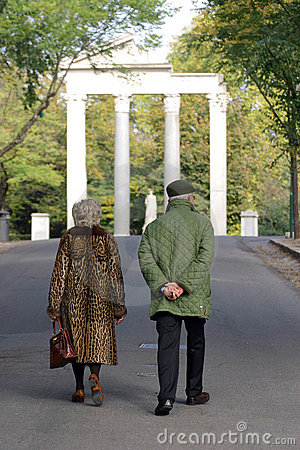
But being the hopeless romantic that I am, I like to imagine that someday an old couple will walk arm-and-arm across the Ponte Milvio and recall when they too placed a lock on this bridge to commemorate the beginning of their love story. They’ll smile because they’ll know that love can last even when the symbol of that love has long gone.


by Toni DeBella
Read Full Post »

“I find television to be very educating.  Every time somebody turns on the set, I go in the other room and read a book.”  –Groucho Marx

Television as a way to learn a foreign language is by no means a new concept.  Since its inception in the late 1940s, newcomers have been using TV as a means to help them absorb their new language, and more importantly, to assimilate into their new culture.  The conventional wisdom of linguists is there’s no relationship between watching television and mastering a language.  I beg to differ.  Based on only nonscientific anecdotal evidence (me), I assert that watching TV is a super supplement to other means of learning because it gives the viewer verbal as well as visual cues.  You can look at it as a “workbook” in a box.  With respect to colloquialisms that are spoken in everyday life, what better place to soak up slang than from a reality show or afternoon soap opera?  After all, if it’s your intention to fit in and become part of your community, you’ll want to become familiar with the common vernacular.

Pantofolaio (Couch Potato) Beware!

Of course, it’s important to take an interactive role in your “boob tubing”.  Passively sitting back and letting the information wash over you isn’t going to cut it.  Obviously television alone cannot replace formal training in grammar and vocabulary.  However, if used deliberately and thoughtfully, TV can be an effective way to enhance your proficiency in three particular areas: pronunciation, commonly used expressions/vocabulary and popular trends.

Italian All day, every day

Wake up and turn on your television set.  You don’t necessarily have to be watching it to get the benefit – the background noise of Italians in conversation is seeping in.  By bombarding your brain with the spoken word, you can train your “ear” to the musical rhythm and cadence of this beautiful language, and repeating words and phrases out loud helps with pronunciation.  It’s like gymnastics for your tongue – reminding you of the importance of enunciating each and every letter to avoid changing a word’s meaning entirely, i.e., penne (a kind of pasta) and pene (penis).  Otherwise, dialogue at the supermarket could get pretty interesting.

Are you listening to me?

Eavesdropping in public places – awkward.   Watching a talk show in your living room – a much more relaxing way to pick up idioms in context (and with the accompanying hand gestures).  Once I’d heard a phase used over and over, I would ask a friend its meaning and how to use it.  For example, “Secondo me” came up a lot on political talk shows.  I learned that it meant “in my opinion/in my view”.  Once it made sense to me in its proper context, I could begin using it with confidence in my own conversations.

Around the Water Cooler

You get a pretty good idea of the political climate of the country, its mores, values and attitudes with a healthy diet of current affairs programming.  Who and what are in fashion can easily be gleaned from entertainment news and nighttime talk shows.


CATEGORICALLY SPEAKING…Types of Shows that give you the most “bang for your buck”:

#1 – Trivial Pursuit (Trivia Shows)

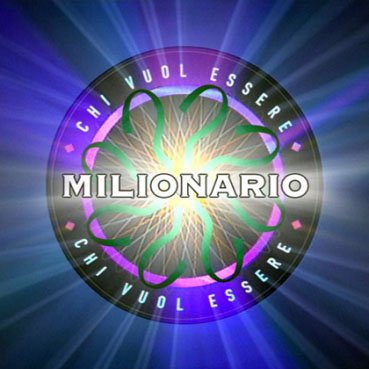
Millionario is one of my favorites.  Gerry Scotti, (the Ryan Seacrest of Italy) hosts this country’s version of “Who Wants to Be a Millionaire”. The beauty of this show is that along with the questions posed to the contestant, you can read the question and possible answers on the screen. Are you a genius in English and Italian?

#2 -Games People Play (Game Shows)

La Routa della Fortuna is the Italian “Wheel of Fortune”Enrico Papi is clever and better looking than Pat Sajak, but the real fun is kooky Victoria Silvstedt, a former Swedish Playboy Playmate ( “Vanna White‘s” counterpart).  It turns out crossword puzzles are a lot easier in your native tongue.   This show is a surprising mixture of trash TV and educational programming rolled into one crazy format.  A wacky way to learn vocabulary!

#3 – Series, Seriously (Episodic Series)

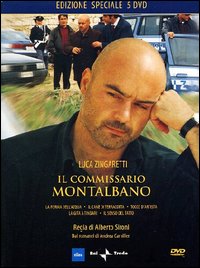
There’s a plethora of serial dramas and sitcoms – many imported from America – that are broadcast weekly (Commissario Montablano, CSI, Law and Order, House, Friends, etc.).  I discovered that you can set most televisions to the closed captioning mode which allows you to watch and read the programs in Italian at the same time.  It really works!

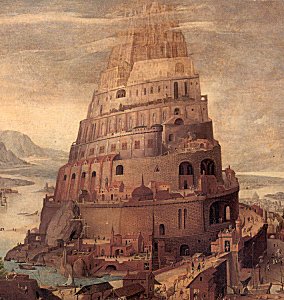
Television Tower of Babel

It all comes down to one thing: communicating.  It seems television has become our modern day Tower of Babel that works to promote understanding by uniting people while acting as a sort of cultural equalizer. TV can make the world seem not just smaller, but downright miniscule.  So, stay tuned!
by Toni DeBella

Read Full Post »

The letter from the Consolato Generale D’Italia a San Francisco arrived in the mail today. The words inside the envelope were a culmination of three long years of hard work and dogged determination: 31/08/11 Dear Ms. DeBella: “I am pleased to notify you that your Italian citizenship has been recognized and that your certificate(s) have been forwarded to the Italian municipality of CORLEONE (PA) for recording.”

Somehow I envisioned this auspicious occasion much differently. There were times when I wondered if this day would ever come. And if it did arrive, I imagined it would be filled with much fanfare, jumping up and down, and screaming. Instead it was a quiet moment. A solitary moment. A very personal moment. It was a time to reflect on what it took for me to get to this place: Patience, tenacity, belief, humor, and a clear intention. August 31, 2011 is the day I became a citizen of Italy.

Italian by Blood Jure sanguinis (“right of blood”) contrasts with jus soli (Latin: “right of soil”) in that citizenship is not determined by place of birth, but rather by having a parent (or decendent) who is a citizen of a nation. In Italy there’s no limit to the generations that can obtain citizenship via blood (except for specific constraints which did not apply to me). Furthermore, because the U.S. and Italy have a reciprocity agreement, one is allowed dual citizenship.

After tracking down my grandparents’ birth certificates (likely located in books archived in church basements of Corleone and Contessa Entellina), respectively, I gathered together some twenty other documents (i.e., birth, death, divorce) for both myself and members of my immediate family. Translations and Apostilles followed, along with a list of discrepancies and misspelled names (of which there were many). And don’t even get me started on the rabbit hole that is the U.S. Department of Homeland Security! This part  of the process took a little over a year to complete. Then there was the waiting period (one-and-a half years, to be exact) for an appointment to personally submit my application to the Italian Consulate.

The procedure was daunting, frustrating, and at times discouraging. When I felt like giving up, I thought about the finish line — life in Italy — which helped to spur me on. I suppose that if becoming a citizen of a country were easy, everyone would do it. You really have to want it!

The Gift

I Nonni DeBella, San Jose, California

Throughout these three years I’ve been fortunate to have the support and encouragement of friends and family, both in the U.S. and Italy. But it was my grandparents, Jake (Gioachino) DiBella and Emma (Ninfa) Pizzo, who deserve my utmost thanks and gratitude for without them none of this would be possible. In the late 1880s, they came to this country as young immigrants from Sicily. They married, worked hard, and raised a family of ten children. I wonder what they would have thought about their granddaughter one day returning to the land they left behind.

It appears that the DeBella family, in the not-too-distant future, is about to come full circle.

by Toni DeBella
Read Full Post »

A picture is a poem without words.” -Horace

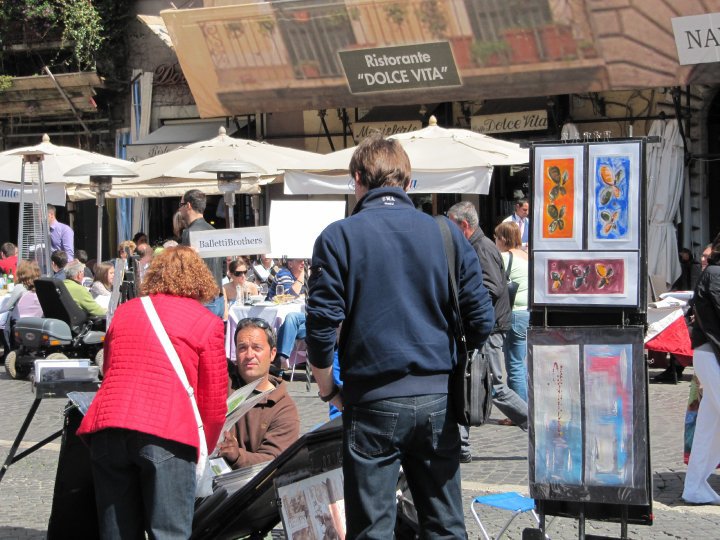
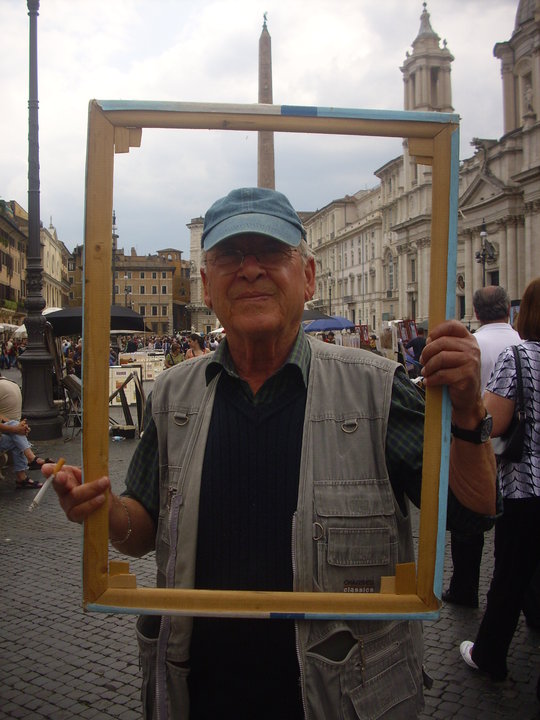
A revolution has been brewing for almost a decade on the Piazza Navona, one of the most famous and historic squares in Europe. Millions arrive to see Bernini’s magnificent Fontana dei Quattro Fiumi (The Fountain of 4 Rivers) and to stroll along the road, hoping to acquire an original picture of a Roman scene painted and signed by the artist in front of them. Now the tensions are high: real artist are pitted against counterfeit ones.

Art is not a thing, it is a way.”- Elbert Hubbard

I can’t intelligently speak to the political or economic ramifications of the most recent decree approved by the City of Rome to regulate painters and street artists on the piazza.  What I can say with certainty is that I believe society is obligated to defend those among us who have the ability to suspend reality and, with a brush in hand, transfer it onto a canvas to make a thing more beautiful – to make l’arte. George Bernard Shaw said it best when he wrote,“Without art, the crudeness of reality would make the world unbearable.”

Performance Artist

In 2005, the Mayor and Council approved a ban prohibiting any type of commercial activity in the center of Piazza Navona. It was declared that permits would no longer be issued to paint in the city. Then came a resolution to govern the artistic profession, but nothing came of it. Nearly 6 years later the absence of rules means anyone (real artists and fakers) can enter and do what they want. The result has been a dilution of creativity and a strengthening of chaos and clutter. The legitimate are at a disadvantage to the counterfeiters who defraud tourists by peddling reproductions passed-off as originals. But why should the artists, some of whom have been on the Piazza since the 1960s, pay the price for the City’s failure to control those who bring urban decay to this beautiful place? Why should the people who have promoted all that is good about the Eternal City and have contributed to its charm and mystique now be threatened with displacement? Leonardo is turning in his grave!

No heirloom of humankind captures the past as do art and language.” – Theodore Bikel

What is at stake on the Piazza Navona is the keepsake of a city. Art has defined Italy since the renaissance and just like the oxygen in our atmosphere, civilization and Rome need it to survive.

Photographs by Toni DeBella and Massimilliano Balletti

Paintings by Massimilliano Balletti

by Toni DeBella

Read Full Post »

« Newer Posts - Older Posts »