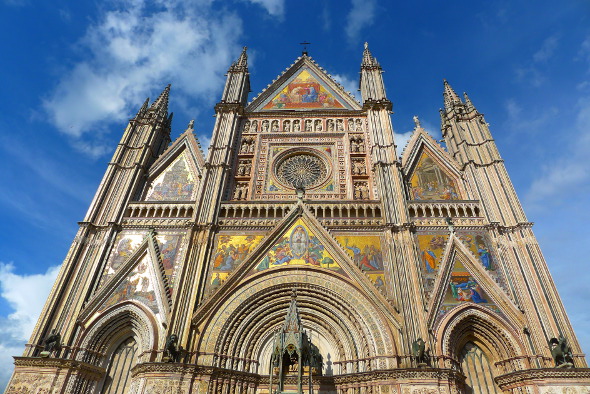
…And what a church it is! The Duomo (cathedral) of Orvieto is nothing less than breathtaking. Built by order of Pope Urban IV to house the Corpal of the Miracle of Bolsena, the Duomo broke ground in 1290 and was completed in 1591. The Gothic facade features a large rose window, golden mosaics and huge bronze doors. Inside the black and white basalt and travertine interiors you’ll find alabaster windows, ancient frescoes and, the ‘pièce de résistance’, the Chapel of the Madonna di San Brizio. This chapal contains one of the most important and beautiful Renaissance masterpieces in the world, “Judgement Day” by Luca Signorelli. Like! Share! Visit!
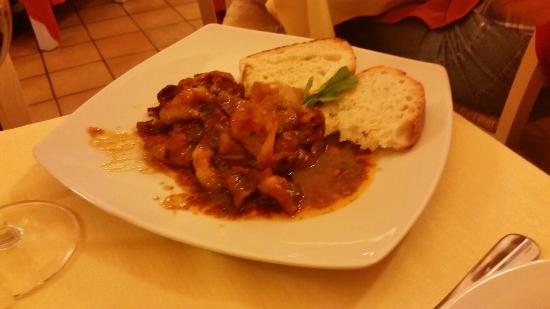
The typical cuisine of Orvieto tends to lean heavily on ‘meat’: Cinghiale (wild boar) and its cousin, maiale (pork), as well as dishes made of pigeon or dove (yes, I said pigeon). These ancient recipes also make room for our vegetarian friends. Umbrichelli is Orvieto’s pasta, often served with porcini mushrooms or ‘tartufo’ (black truffles). My favorite dish, Guanciale/Baffo (pork cheek) in a sage-tomato sauce, can be found at Trattoria del Moro Aronne where owner Cristian Manca provides great service and doubles as the entertainment. You’ll always ‘mangia bene’ in Orvieto! Like! Share! Visit!
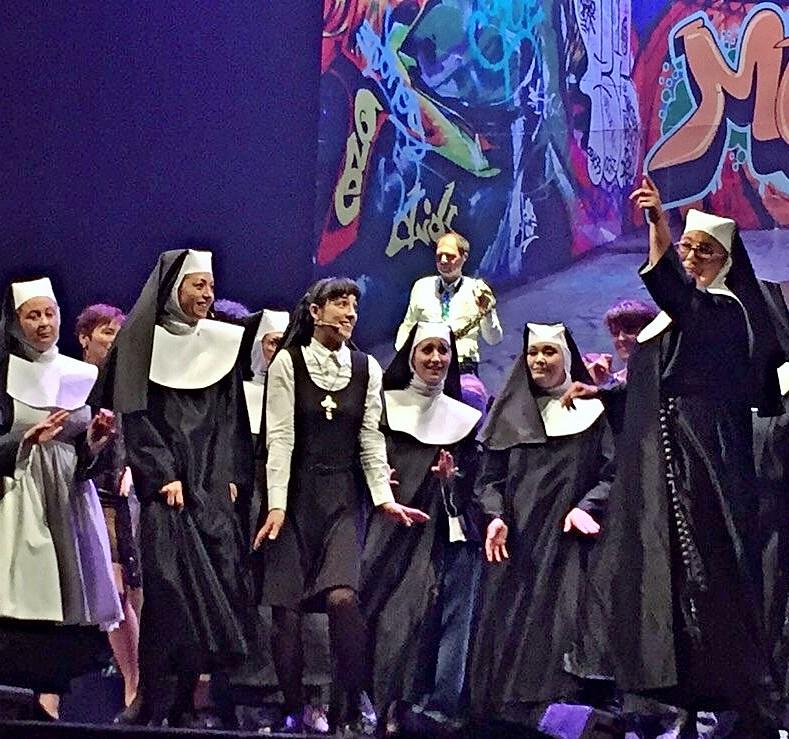
Some might say that Orvieto is a sleepy little town with not much going on…but there’s one group of citizens that would beg to differ. Compagnia Mastro Titta, under the direction of Paola Cecconi, is a community theatre group comprised of 54 ‘kids’ (ages 10 to 83) that presents musicals and comedies that are anything but ‘amateur’. Recent sold-out productions include: Sister Act 2, Mamma Mia, Grease, Flashdance and Hello Dolly. Check the calendar at Teatro Mancinelli (see Day #5) for upcoming shows! Bravi, Bravi! Like!Share!Visit!
What can you do when temperatures top 38C (100F)? Eat gelato of course! But don’t settle for just any old ice cream…head to the world-renowned Gelateria Pasqualetti (http://www.ilgelatodipasqualetti.com). This family-owned and operated artisan gelateria makes the real thing: Whole, natural and delicious gelato with the colors and the scents of real fruit – without gimmicks, chemicals or thickeners. You’ll find them at 1 of 2 locations: 10 Via del Duomo and a summer-only shop at 14 Piazza del Duomo. Go out and ‘lick’ the heat….FYI: Gelato is great in the dead of winter, too!
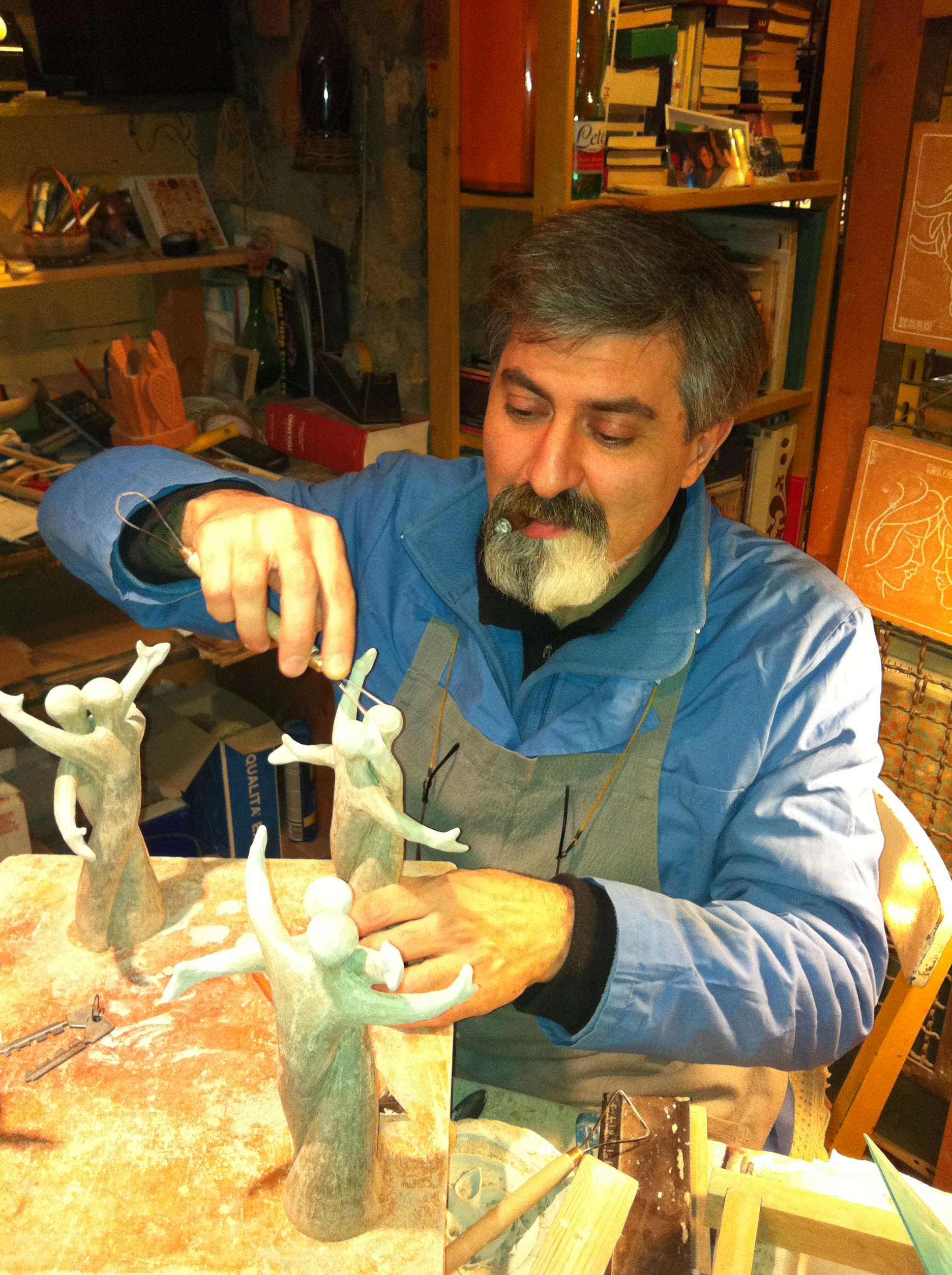
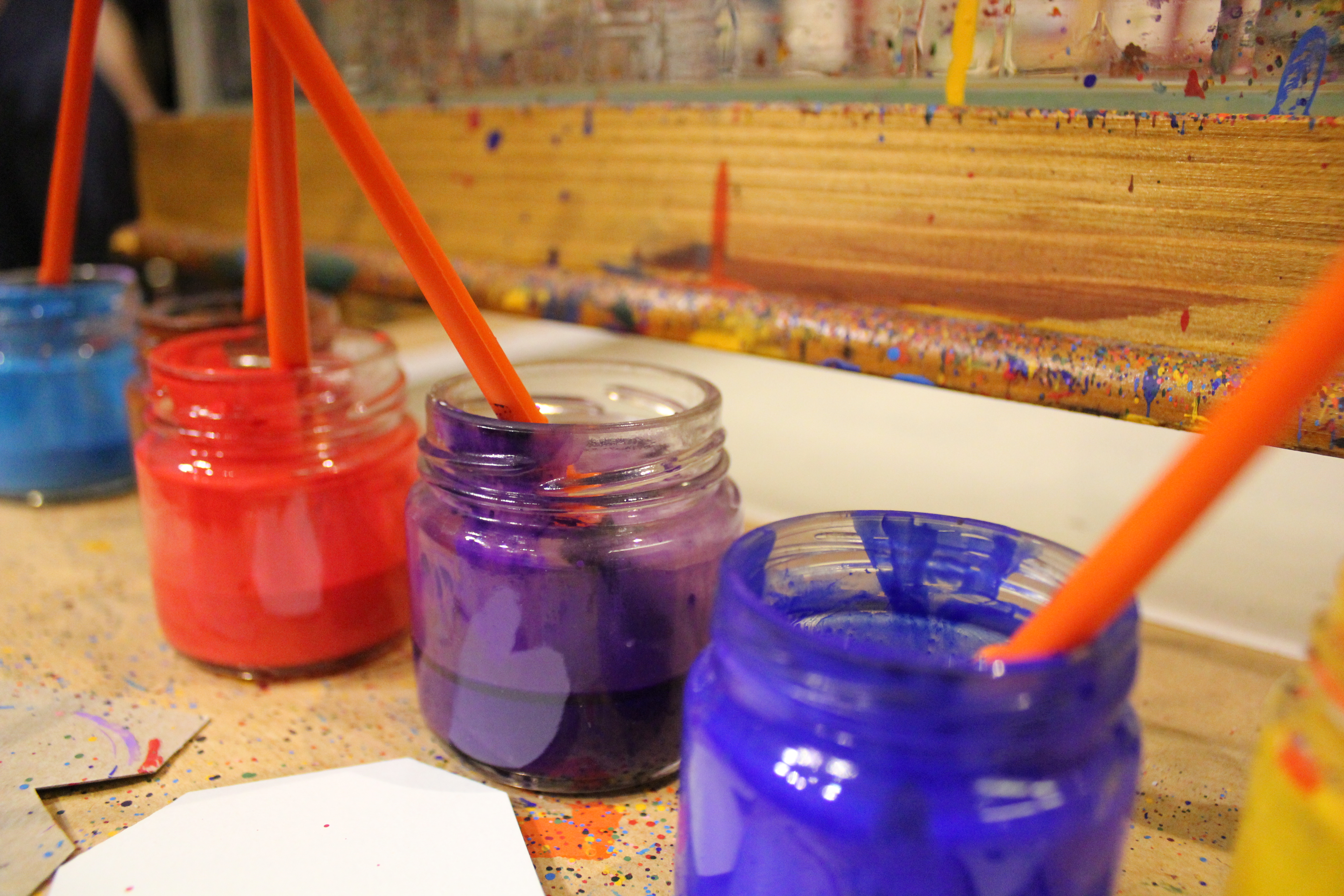
Lamberto Bernardini’s 15th-century papermaking studio is where you can see carta marmorizzata (marbled paper) being made by hand. “Floating paper” has been traced back to Japan 835 C.E., but it really developed as a true art form in Persia and Ottoman Turkey, eventually finding its way to Europe, where it remains an important decorative craft today. Back in 2012 Steven Brenner of Cross-Pollinate & The-Beehive and I made a film about Lamberto in his Orvieto workshop, where you can also take a small group or private class to learn how to make marbled paper yourself! Check it out and then…Like! Share! Visit!
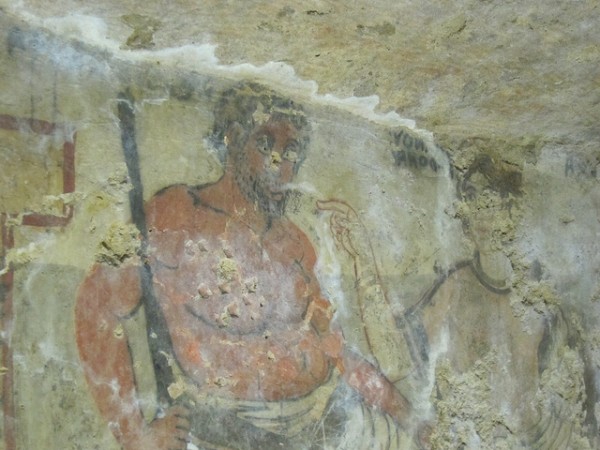
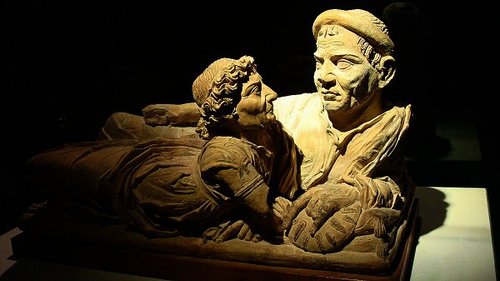
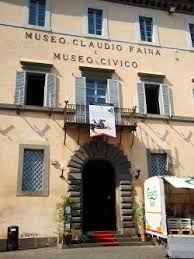
Before it was Orvieto, this Etruscan city was called Velzna (circa 3rd century B.C.). The Etruscans may have been short in stature, but they were long on engineering and cultural sophistication. They were adept winemakers, perfected the terracotta potter’s wheel and were stellar metalworkers. Etruscan authority, Professor Claudio Bizzarri, says Etruscan sculptors were called to Rome to decorate the Temple of Jupiter. “They taught Romans to use civil engineering instruments to survey and build their famous roads”. Etruscan innovation is astounding, especially considering they didn’t have the benefit of modern machinery. Their civilization survived from 900 B.C. until its decline and integration into Roman culture around 100 B.C. Learn more by visiting the archeological and Etruscan collections at Il Museo Claudio Faina in Piazza del Duomo. http://www.museofaina.it.Like! Share! Visit!
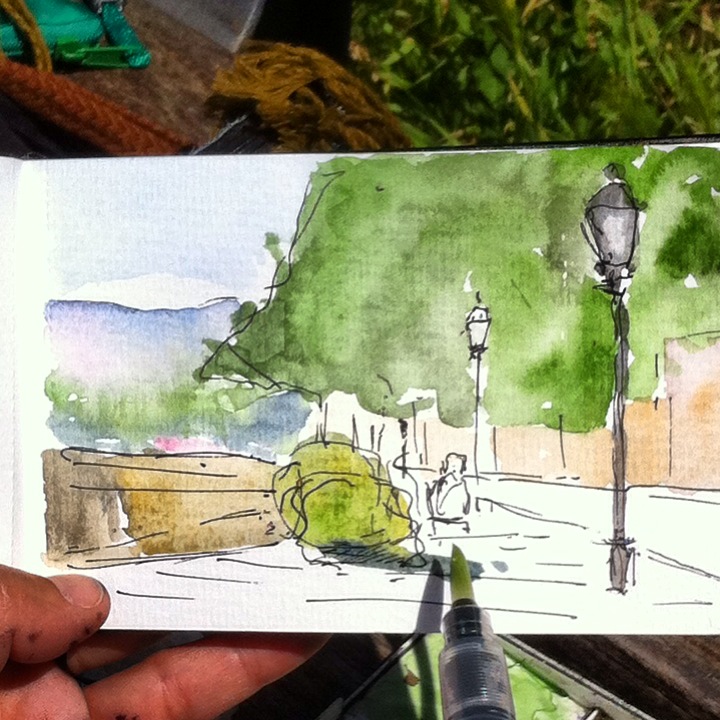
La confaloniera (a promenade on the northern edge of the wall) is not a ‘secret’ exactly, however many visitors don’t often find themselves in this part of town…but they should. It’s a lovely place for a morning walk, to sit on the bench, sketch countryside scenes or read a book in solitude. From Piazza Del Popolo, walk away from the center of town on Via Pza del Popolo to where the street ends. There are two shady childrens’ playgrounds, and at night, the glow of lamplight creates a romantic atmosphere – perfect for lovers. Like! Share! Visit!
Orvieto is a vibrant and lively city, but it also offers a slower, tranquil pace. In the daytime, the city swells with visitors (yah, we like that), but at night, locals come out with their families for a stroll along the ‘Corso’. Maybe they have a gelato – or as we did last evening – stop to enjoy an impromptu string concerto. There’s always something to do and see in Orvieto…and sometimes it’s completely unexpected!Like!Share!Visit!
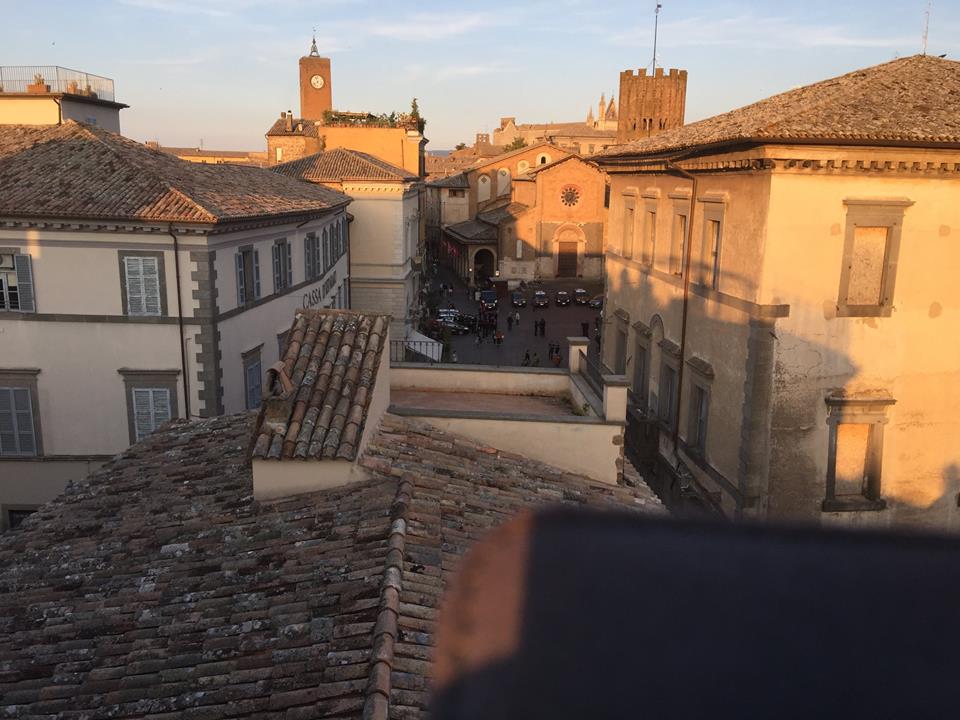
As we come to the mid-point of our project to spread the word about the marvels of Orvieto (in 31 installments), today I thought I’d post some of my favorite shots of life in Orvieto. If you love Orvieto or want to support the effort to “passaparola” about Orvieto’s beauty and history, then ‘like’ the posts, ‘share’ them and then ‘visit, visit, visit’!















 Orvieto or Bust: